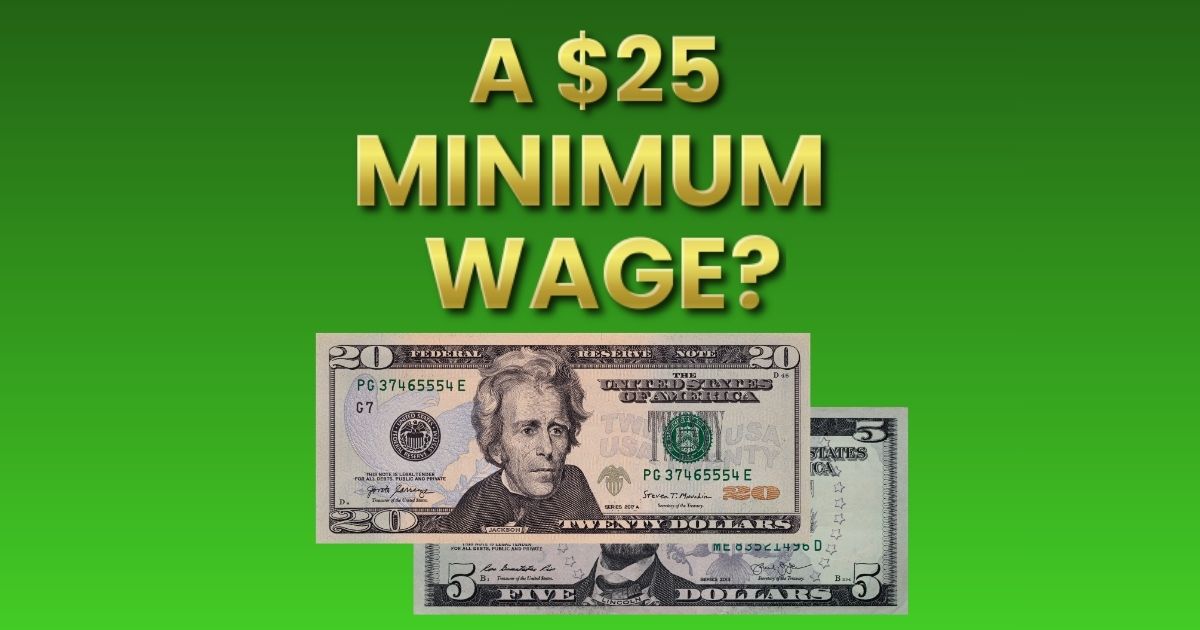
The proposal is called the Living Wage for All and would increase the federal minimum wage to $25 dollars an hour.
The backers of this bill are liberal groups that range from the National Coalition of Labor, civil rights, and economic justice organizations, including:
The Squad, Unions like SEIU, Federation of Teachers, the National Education Association (NEA), NAACP, Center for Popular Democracy, One Fair Wage, Our Revolution, Alliance for a Just Society, Patriotic Millionaires, New Disabled South, Keystone Progress Education Fund and the National Organization for Women (NOW).
Supporters say the wage increase is needed to deal with America’s affordability crisis.

“There is no place in America where a worker can afford to live on less than $25 an hour,” said a press release in favor of the wage hike.
How would the minimum wage take shape if passed?

According to the proponents of this bill, it would establish a 2-track phase-in, requiring large, highly profitable corporations to lead the transition. Large employers would reach $25 by 2031, while smaller employers would phase in more gradually, reaching $25 by 2038.
But many free-market and conservative groups oppose this measure.

“If the minimum wage needs an increase, then why are these groups stopping at just $25 an hour? Why not $30 or $35 an hour?” says David Williams from the Taxpayers Protection Alliance.
The current federal minimum wage is $7.25 an hour, and Williams points out that many states already have higher minimum wages, and many companies already pay more than some states require per hour.
“And what’s with this the attitude of a one size fits all? said Williams. “Yes, could much larger corporations absorb a higher minimum? Sure, but to mandate on smaller companies with very few employees would either make them go out of business or force them to raise prices, either way it’s a lose-lose proposition.”