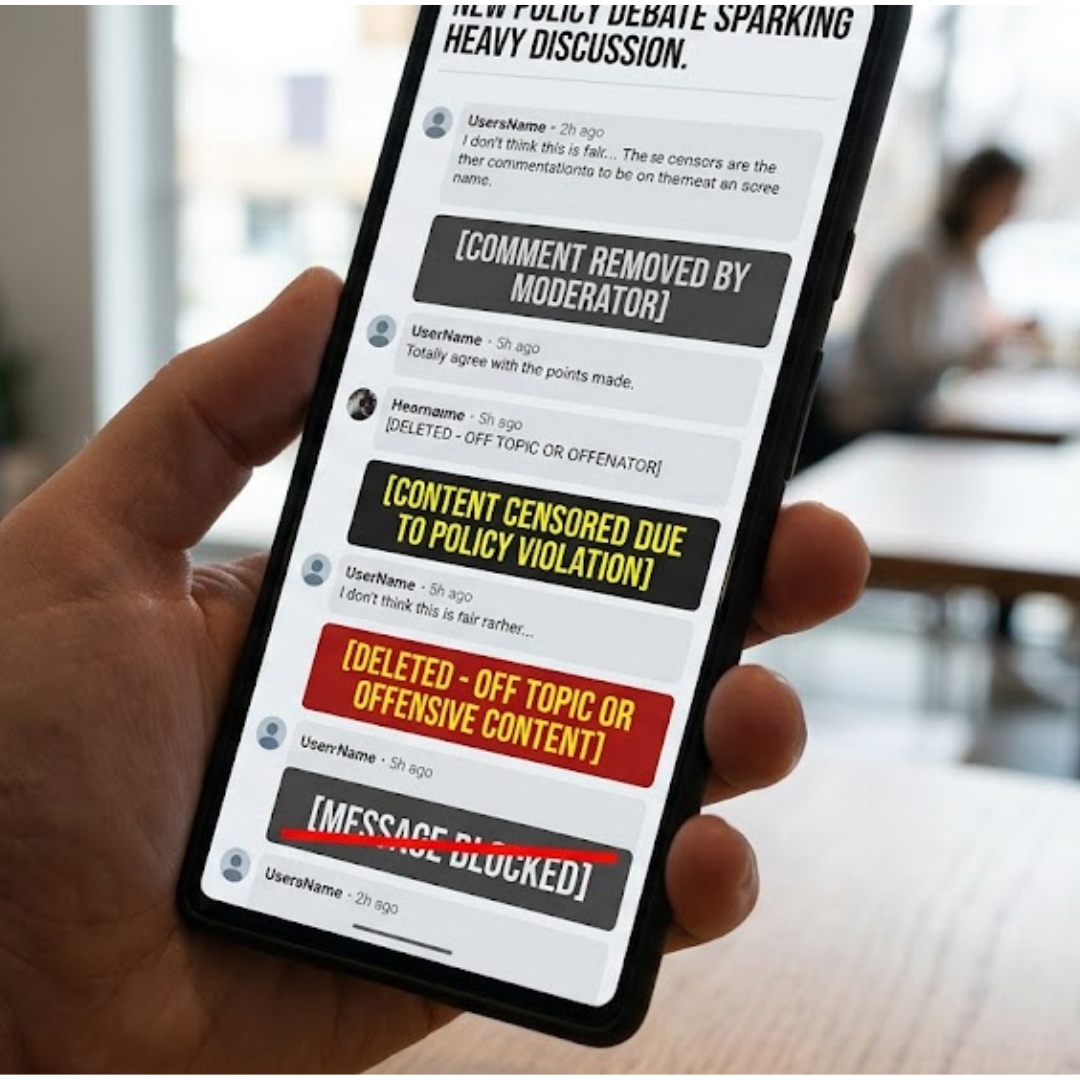
Nearly half of likely U.S. voters say the federal government should take action to suppress “hate speech” on the Internet, according to a new Rasmussen Reports survey that shows support for such action has grown significantly over the past four years.
The national telephone and online survey found that 49% of likely voters favor federal government action to suppress hate speech online, up from 41% in 2022. Twenty-nine percent said they oppose such action, while 22% were unsure.
Rasmussen cited the Cambridge Dictionary definition of hate speech as “public speech that expresses hate or encourages violence toward a person or group based on something such as race, religion, sex, or sexual orientation.”
The survey also found that 79% of voters consider hate speech on the Internet a serious problem, including 50% who said it is a “very serious” problem. That is up from 70% who considered online hate speech serious four years ago. Fifteen percent said they do not consider it a serious problem.


The issue shows sharp partisan differences. Sixty-seven percent of Democrats said Internet hate speech is a very serious problem, compared with 40% of Republicans and 40% of voters not affiliated with either major party.
Democrats were also more likely to support federal action. Sixty-two percent of Democratic voters said the federal government should act to suppress hate speech online, compared with 44% of Republicans and 40% of unaffiliated voters.

The poll found that 77% of voters believe hate speech on the Internet contributes to violence against women and minorities, including 46% who said it contributes “a lot.” Fifteen percent said they do not believe online hate speech contributes to such violence.
There was also a significant gender gap in the results. Fifty-seven percent of women voters said online hate speech is a very serious problem, compared with 42% of men. Women were also more likely to support federal action, with 55% favoring government efforts to suppress online hate speech, compared with 41% of men.
Black voters were more likely than other racial groups to view online hate speech as a very serious problem and to favor government action. Rasmussen found that 62% of Black voters described the issue as very serious, compared with 48% of white voters, 42% of Hispanic voters and 50% of other minority voters.

Older voters were among the most likely to say online hate speech is a very serious problem and to believe it contributes significantly to violence against women and minorities. A majority of voters earning less than $50,000 a year also said the federal government should take action to suppress hate speech online.
The survey also showed a split by 2024 presidential vote. Among voters who backed Kamala Harris, 57% favored federal action to suppress Internet hate speech. Among voters who supported Donald Trump, 40% favored such action.
The survey of 1,073 likely U.S. voters was conducted May 21 and May 24-25, 2026, by Rasmussen Reports. The margin of sampling error was plus or minus 3 percentage points with a 95% level of confidence.