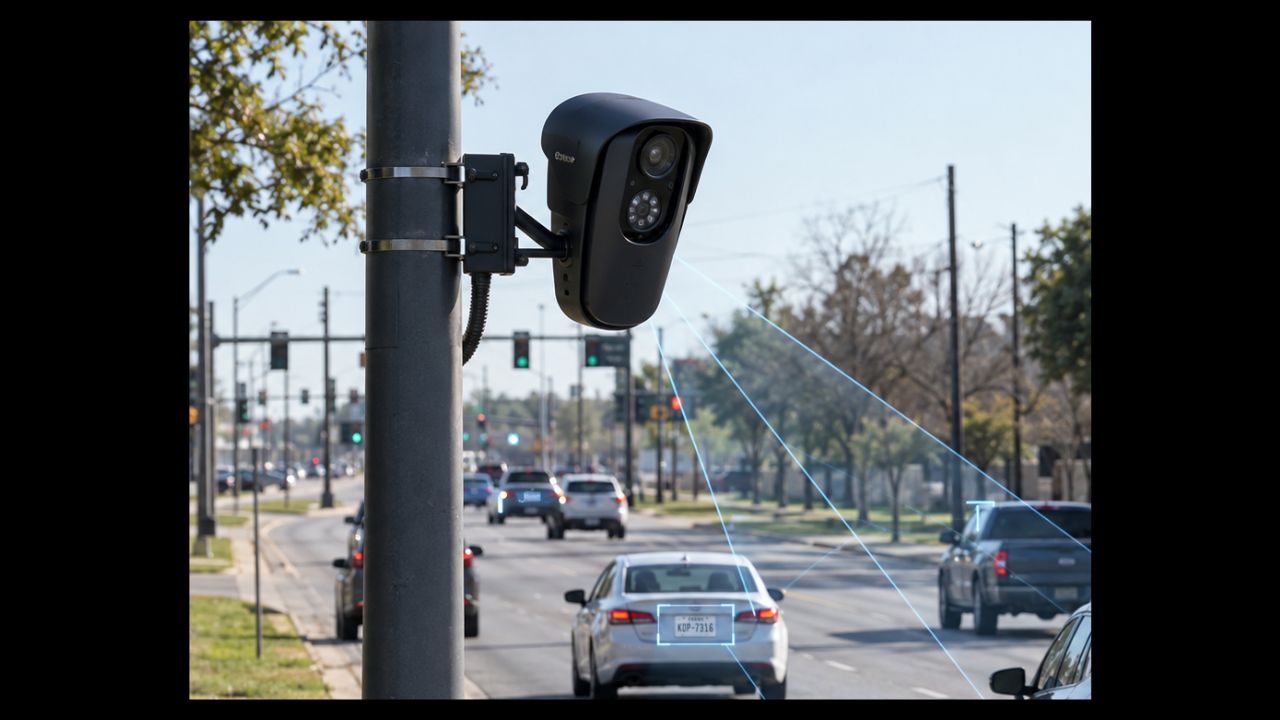
Just last month, a 99-year-old St. Petersburg man set out to drive to his daughter’s house and never got there. Police put his tag number into their license plate reader system. A camera on Tyrone Boulevard picked up his car, and officers reached him within four minutes. “Without this technology, we would have never found him,” St. Petersburg Police Chief Anthony Holloway told WFLA. That camera sits on U.S. 19, which means it has to come down.
On Aug. 31, the Florida Department of Transportation revoked permits for automated license plate readers on state highway rights-of-way and gave local agencies 30 days to remove them. The deadline is Sept. 30. Gov. Ron DeSantis has said Florida must avoid becoming a “digital AI surveillance state,” News4JAX reported. Cities and counties can still decide about cameras on their own roads, but the order takes cameras off many of Florida’s busiest roads.
Sheriffs and others across the state are warning about what that means for public safety.
“ALPR’s are the greatest investigative tool law enforcement has in their arsenal today. Law Enforcement’s use of ALPR’s is not a violation of privacy or a violation of anyone’s constitutional rights, and that is because the law enforcement community has safeguards in place within their policy to help protect those rights,” said Marion County Sheriff Billy Woods. “The fact that individuals have been disciplined or arrested for misuse is clear evidence that the safeguards are in place. Removing this tool from law enforcement, without a doubt, will set us back in time by decades on solving crimes, finding lost loved ones and protecting our citizens.”

Jacksonville shows what is being lost. Sheriff T.K. Waters shut down the county’s program entirely after the state’s decision, even while calling the technology “an enormously valuable investigative tool.” Since 2024, the Sheriff’s Office says, license plate readers had helped investigators solve 15 murders, 17 kidnappings and nearly 100 shootings, and helped in 172 missing-person cases. One camera helped officers find a teenage girl who had been kidnapped from her Georgia home and taken to a Jacksonville motel. Investigators also used the cameras to catch the suspects in the killing of a corrections officer at a truck stop within 48 hours.

St. Johns County Sheriff Rob Hardwick told county commissioners about a fatal hit-and-run. Detectives matched a headlamp fragment to a white Honda, then used the cameras to place that car near the scene. When deputies found the driver, the car was being loaded onto a tow truck for repairs. In another case, the system helped identify a man accused of sexually assaulting a 12-year-old girl at a bus stop. That suspect was later linked to similar crimes against 13 other children in Flagler County.

So far this year, Hardwick said, the cameras have helped his office recover 29 stolen vehicles and 35 missing people, arrest 35 wanted people, and clear 132 felony charges. Roughly half of his office’s approximately 182 cameras will come down under the state order.
In Orange County, the Sheriff’s Office says the technology helped in a Pine Hills serial rape investigation. It also helped in the murder case of 13-year-old Madeline Soto. Polk County Sheriff Grady Judd called license plate readers “the single best tool to keep people safe,” according to the Tampa Free Press.
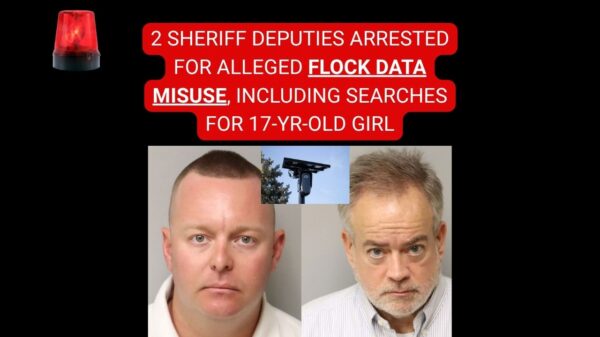
Concerns about privacy and misuse are real. There have been documented cases of officers misusing the system, and those cases deserve serious consequences. But the answer to misuse is accountability, not taking away a tool that solves violent crimes.

“Florida’s police chiefs take privacy seriously, and anyone who abuses this technology should face real consequences. But when a tool helps us bring home a missing child or identify the person who pulled the trigger, the answer to misuse is accountability, not removal,” said Vero Beach Police Chief David Currey and president of the Florida Police Chiefs Association. “The Florida Police Chiefs Association has already begun work on model policy standards and stands ready to work with the Governor, the Legislature and our sheriff partners to build clear statewide standards so every agency in Florida uses this technology the same responsible way.”
Much of that accountability is already in place. Flock Safety has announced that by Jan. 1, every law enforcement customer must use an audit tool that flags unusual search activity. Officers will also have to link each search to a case number, and standard data retention will drop from 30 days to seven. St. Johns County has cut its own retention period to 30 days and stopped sharing its data with outside agencies.
Holloway said the state should look at what agencies already have in place and build one plan everyone can follow. That’s a reasonable path forward. Removing the cameras first and writing the rules later is not.
Jacksonville mother Latasha Hobbs knows what’s at stake. Her son Maurice was killed in 2017, days after his 18th birthday, before local police used the cameras. His case remains unsolved. Hobbs supports stiff penalties for anyone who misuses the technology, but she wants the cameras to stay. “It’s been proven to help,” she told News4JAX. “It helps solve crimes.”
“When someone you love is in danger, you want us to have every responsible tool available to help find them and solve the crime,” the Jacksonville Sheriff’s Office said in a statement in August.
Florida’s families deserve that too.