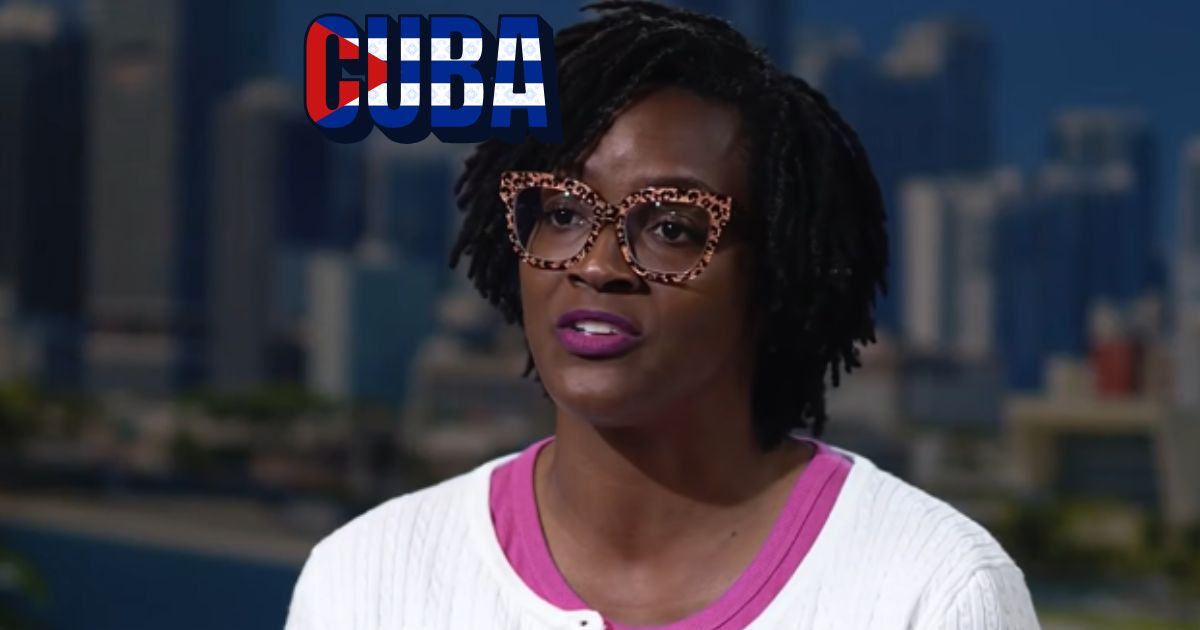
Florida Democratic U.S. Senate candidate Angie Nixon is facing bipartisan criticism after appearing reluctant to directly acknowledge that Cuba is a dictatorship, prompting a clarification just days before the Midterm Election.
During an interview with CBS News, Nixon was asked whether she considered Cuba a dictatorship. “That is what people have told me. I have never been to Cuba, and so I will have to take their word for it,” Nixon responded.


The Jacksonville area state representative, who is challenging Republican U.S. Sen. Ashley Moody, subsequently shifted the discussion toward criticizing the longstanding U.S. embargo against Cuba, arguing that the policy has failed to bring political change while hurting Cuban families.
Facing mounting criticism, Nixon attempted to clarify her remarks, insisting that she believes Cuban Americans who have described the country’s government as a dictatorship. “I clearly state in this clip that while I have not personally been to Cuba, I have spoken with Cubans who have described it as a dictatorship, and I believe them,” Nixon wrote on social media. She also accused CBS News of misrepresenting her answer. The network subsequently deleted its original social media post, acknowledging that its characterization of her remarks was inaccurate. However, Nixon’s initial response continued to draw criticism from both political parties. Democratic congressional candidate Eliott Rodriguez declared that Cuba’s dictatorship was not a matter of opinion but an established fact, while Moody and other Republicans questioned Nixon’s judgment.
The controversy could prove particularly damaging among Cuban American voters in South Florida, where generations of families have personal connections to political repression under Cuba’s communist government. Miami-Dade County, home to a substantial Cuban American population, has become increasingly competitive territory for Republicans, and Nixon’s comments could further complicate Democratic efforts to regain support in the region. Her membership in the Democratic Socialists of America adds another political vulnerability among voters who associate socialism with the Castro government’s decades of authoritarian rule. NBC 6 political analyst Alex Pinellas said the remarks would not help Nixon with older Cuban American exiles, although he also suggested many of those voters were unlikely to support her in the first place. The greater political risk may be alienating persuadable Cuban American voters or reinforcing doubts about Democrats’ willingness to confront the Cuban regime.
The dispute comes at an especially difficult time for Nixon, with Election Day less than a week away and Republicans seeking to retain Florida’s U.S. Senate seat. Moody has seized on the controversy, arguing that a Senate candidate should be able to identify a communist dictatorship without hesitation. Nixon, meanwhile, has maintained that she opposes authoritarianism and has emphasized her criticism of U.S. immigration policies affecting Cuban migrants. Whether her subsequent clarification can limit the political fallout remains uncertain. But in a state where Cuban American voters have historically played an influential role in elections, the controversy has handed Republicans a new campaign issue at a critical moment in the race.