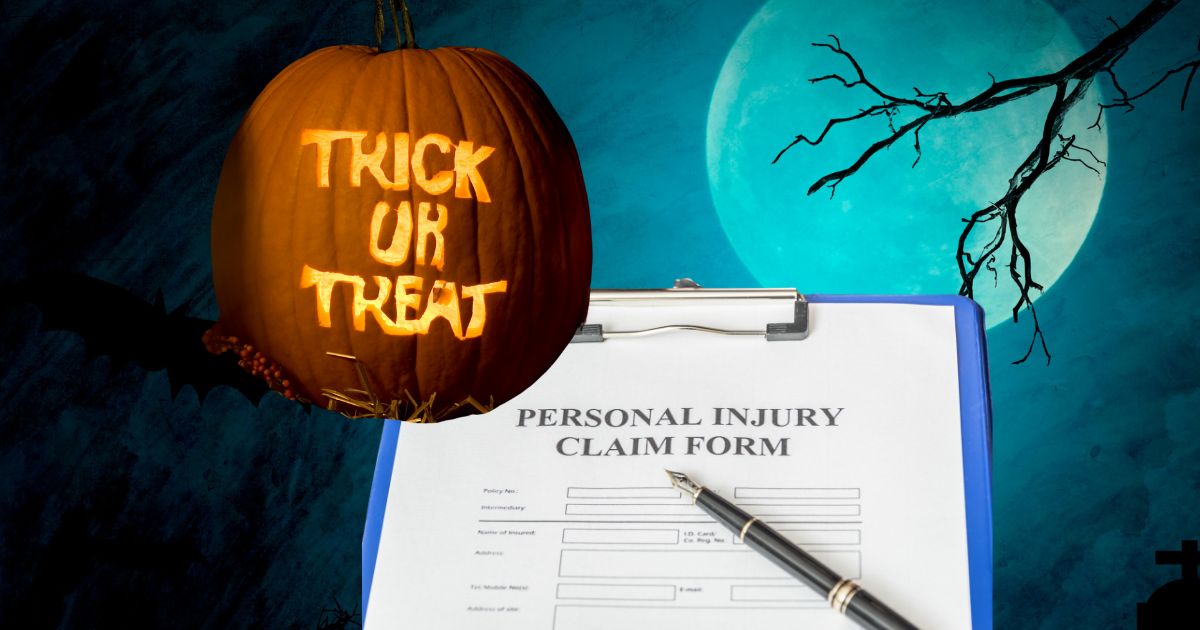
If there is an accident related to Halloween, you can be sure trial lawyers are ready to pursue lawsuits against HOA’s, families, anybody handing out candy and car drivers.
Legal analyst Rusty Reynolds, co-founder of Reynolds & Reynolds Injury Law, actually laid out a list of activities that could potentially be “Halloween hazards.”
Some of these include streets, private property after dark, creating a predictable mix of poorly lit walkways, temporary decorations, extension cords, traffic, excited children, pets, costumes that impair visibility and crowded haunted attractions.
Here’s a list of potential liabilities.
TRICK OR TREAT TRIP AND FALLS: WHEN IS A HOMEOWNER RESPONSIBLE?
Dark walkways, cracked sidewalks, uneven pavers, extension cords, decorations and poorly lit steps can become hazards when homeowners are actively inviting children onto their property.

THE HALLOWEEN DECORATION DANGER ZONE

Inflatable decorations, electrical cords, fog machines, stakes, temporary lighting and elaborate yard displays can create unexpected hazards.
CHILD HIT BY A CAR WHILE TRICK OR TREATING: WHO CAN BE LIABLE?

Halloween combines darkness, excited children, pedestrians crossing between parked vehicles and increased neighborhood traffic. Discuss driver responsibility, pedestrian accidents, distracted driving and what happens when both a driver and other circumstances contribute to an injury.
COSTUMES THAT CAUSE ACCIDENTS
Masks that restrict vision, costumes dragging on the ground, oversized shoes, capes and dark clothing can increase fall and traffic risks. What happens legally when an unsafe or defective children’s costume contributes to an injury?
HALLOWEEN CANDY INJURIES: WHEN DOES A TREAT BECOME A LIABILITY ISSUE?
Choking hazards, undeclared allergens, contaminated products and foreign objects can turn candy into a serious injury issue and how this could include the responsibility of manufacturers and retailers depending on what caused the injury.
HAUNTED HOUSE INJURIES: IF YOU SIGNED A WAIVER, WHAT DOES THAT MEAN?
Haunted attractions deliberately create darkness, sudden scares and confusing environments. What happens when a guest trips, falls, is struck by a prop or suffers another injury? This provides a strong broadcast opportunity to explain what liability waivers may and may not cover.
DOGS, DOORBELLS, COSTUMED CHILDREN.
Repeated doorbell ringing, strangers approaching the house and children in unusual costumes can create a difficult environment for pets. Who may be responsible when a dog bites or knocks down a trick-or-treater?
THE NEIGHBORHOOD GOLF CART PROBLEM ON HALLOWEEN NIGHT
Communities where parents shuttle children between houses using golf carts, e-bikes or other small vehicles, Halloween can create a dangerous mix of children, darkness and unconventional transportation. Discuss crashes, child passengers, insurance coverage and potential liability.
Reynolds says if somebody gets hurt, it raised questions about negligence, premises liability, insurance coverage and who may ultimately be responsible.