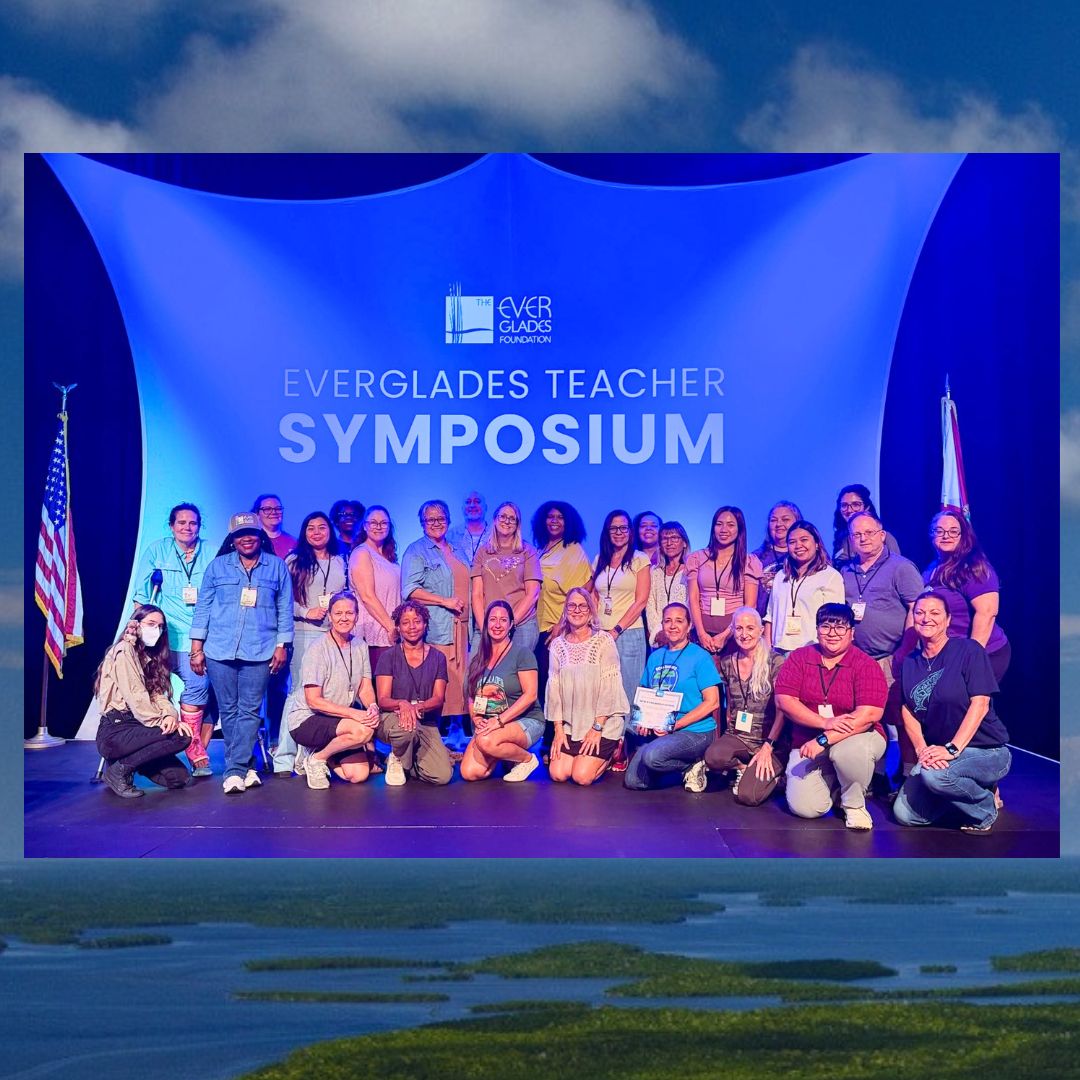
The Everglades Foundation’s Annual Everglades Teacher Symposium drew a packed crowd of over 200 teachers
The event is year’s 9th Annual Teacher Symposium, themed “Stewardship Starts With Love,” puts the connection together between teachers and students on Everglades education exploring science and creativity.
The session kicked off with comments from Isaac Nelson. Nelson is known as an award-winning young filmmaker, conservationist, and founder of Eco Scouts, a youth-led group protecting Florida’s coastal ecosystems.
Some of the films produced by Nelson were Mangroves Matter and the award-winning Shoreline Story.

Other topics discussed that day:
“Everglades Engineers: Wildlife Bridge STEM Challenge,” educators explored a hands-on lesson that asks students to design safe passages for Everglades species affected by habitat fragmentation. Using recycled materials and a budget-based engineering model, students can plan, build, test, redesign, and justify solutions while practicing science, math, collaboration, and evidence-based reasoning.

“Everglades Wildlife Watch” introduced educators to a Florida Fish & Wildlife Conservation Commission program that uses trail-camera images and the online platform “Zooniverse” to help scientists study species diversity, wildlife behavior, and habitat use across the Greater Everglades, improving teachers’ and students’ understanding of the region’s rich biodiversity and interconnected ecosystems.
Science learning took a creative turn in “Picture Books as a Springboard for Learning,” featuring author and Florida Master Naturalist Susan Levine. Using Jenny’s First Catch, the session connected science, literacy, art, and personal growth. Teachers explored ways to help students learn about wading birds, habitat protection, writing, illustration, and storytelling—showing how Everglades education can connect scientific concepts with creativity and a student’s sense of place.

The “Green Schools Challenge” by Dream in Green highlighted a whole-system approach to sustainability education, engaging students in activities that save energy and water while connecting natural resources, climate change, and community sustainability. For teachers, the program offers a practical model for turning campus sustainability into student learning and action, reinforcing that stewardship begins in everyday choices.
The symposium concluded with “The Everglades in Every One of Us,” an immersive reflection activity that invited educators to create self-portraits using natural materials. Through this experience, participants explored how they are connected to the Everglades ecosystem, and recognized the important role they play in shaping its future through education and stewardship.