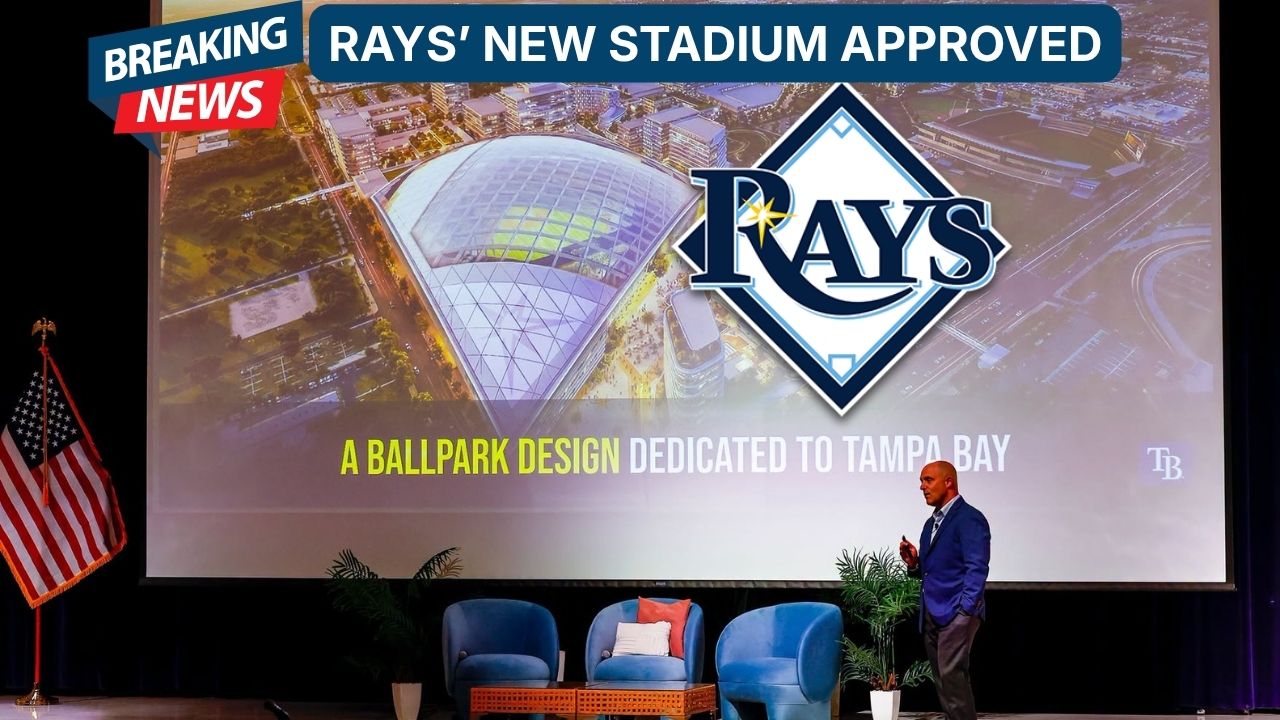
A new stadium will be constructed for the Tampa Bay Rays MLB baseball team, and it will put the team in Tampa, rather than St. Petersburg, for the first time in the franchise’s history. Following Tampa City Council’s approval of the $2.3 billion stadium deal on Thursday, the Hillsborough County Commission voted in favor of the deal today.
“The Tampa Bay Rays enthusiastically thank and applaud the Hillsborough County Board of County Commissioners for making history. By virtue of its approval of a county investment in partnership with the Rays and the City of Tampa, today our entire region can celebrate the coming of a privately financed and mixed-use neighborhood, a reinvented Hillsborough College campus, and a new ballpark that secures the long-term future of Major League Baseball here in Tampa Bay,” Tampa Bay Rays Chief Executive Officer Ken Babby said. “With deep gratitude, we commend Hillsborough County Chair Ken Hagan and his fellow elected officials for their vision and support. We are also grateful to Dr. Ken Atwater, President of Hillsborough College, who has been an inspiration throughout this journey. We all have more work ahead, but there is no question our partnership will ensure a cohesive and successful process.”

A BIG BLOW TO ORLANDO’S MLB HOPES
Tampa Bay’s stadium agreement could deal a potentially fatal blow to the Orlando Dreamers’ long-running effort to bring Major League Baseball to Central Florida. The Dreamers have spent years promoting Orlando as either an expansion market or a possible destination for the Rays, arguing that the region’s population growth, tourism industry and corporate base could support an MLB franchise. But with Hillsborough County, the City of Tampa and the Rays moving toward a new ballpark designed to secure the team’s long-term future in Tampa Bay, one of Orlando’s most plausible paths to the major leagues appears to be closing. Rays CEO Ken Babby’s declaration that the franchise will be “home forever in Tampa Bay” further underscores how dramatically the landscape has changed for Orlando.
The Dreamers could still pursue an expansion franchise, but that route is far less certain and would likely require competing against other interested markets for a limited number of teams. Orlando’s case was considerably stronger when the Rays’ future in the Tampa Bay area remained unsettled, creating the possibility that an existing Florida franchise could relocate roughly 85 miles east. If the Tampa stadium project proceeds as planned, Orlando would instead have to convince MLB owners that Florida should support a third franchise — while also assembling an ownership group, stadium financing package and expansion fee potentially worth billions of dollars. The Tampa agreement does not technically end the Orlando Dreamers’ campaign, but it may remove the group’s most realistic opportunity to turn its vision into a Major League Baseball franchise.