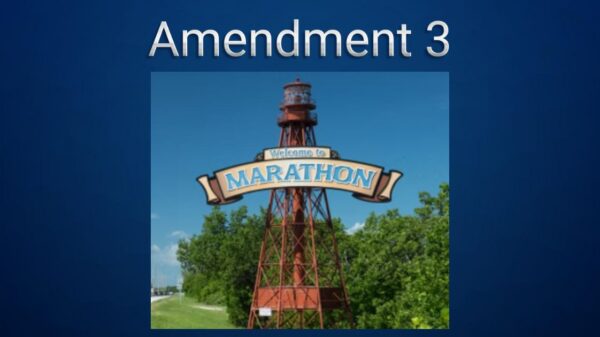
As first responders and county commissioners denounce Florida Amendment 3’s homestead property tax cut, even original supporters, including Governor Ron DeSantis, are beginning to question whether it will reach the 60% voter support threshold to pass.
The conversation transcript is below:
The Florida Daily Show — Hosted by Ed Dean, featuring Kaitlin Colgate and Matt O’Hern
Florida’s proposed property tax changes are generating debate among local governments, law enforcement organizations, firefighters, homeowners and taxpayers.
On The Florida Daily Show, host Ed Dean joined panelists Kaitlin Colgate and Matt O’Hern to discuss whether Amendment 3 would provide meaningful property tax relief or shift costs elsewhere, potentially affecting public safety services, local government budgets and renters.
The conversation also addressed government spending, public employee pensions and whether Florida lawmakers adequately developed the proposal before presenting it to voters.
Will Property Tax Cuts Threaten Public Safety?
Ed Dean: Set aside the potential funding losses for sheriffs, police officers and first responders for a moment. We’ll get to whether you support the tax proposal.
Does the argument hold up that local governments have increased their budgets by 40% to 50% over the last five years but somehow have no room to cut?
It used to be that whenever someone proposed spending cuts, we’d hear about NPR or parks being eliminated. Now it’s first responders. That’s the argument being used to convince people to vote against this.
The Florida Sheriffs Association and the firefighters union, both influential organizations, have doubled down on their opposition and started running advertisements.
Kaitlin, there’s a lot of debate about this, and we cover both sides.
A friend of mine made an interesting observation. He said we’ve had tax increases, but he’s never seen first responders arrive any faster. We’ve also had tax cuts, and he’s never seen them arrive any slower.
Your sheriff is probably the most popular elected official in your county. That alone might be enough to defeat this amendment.
Is law enforcement being overly dramatic by suggesting that if property taxes are cut, public safety services will suffer dramatically?
Kaitlin Colgate: Yes and no.
Yes, in the sense that we’d have to rely on counties and municipalities to do the right thing with their budgets.
But here’s where I say no: Some counties know their mayors, commissioners and city council members aren’t necessarily going to allocate money responsibly.
The reality is that much of the funding for police and fire departments comes from property taxes.
If property taxes are reduced without every municipality having a plan to replace that revenue, I could see response times increasing simply because departments might have fewer employees.
My biggest issue is that we’re putting even more trust in local governments to do the right thing with taxpayers’ money when we already know they don’t always spend it responsibly.
Are Public Employee Pensions the Real Problem?
Ed Dean: Matt, I hear from a lot of police officers who say, “Give me more money per hour and let me worry about my own retirement.”
I think there’s enough money to cover salaries. The bigger debate is about pension plans.
Even my conservative friends acknowledge there’s waste in the U.S. military budget. The same principle applies here.
We have to address pensions. If you reform the pension system, you could potentially free up a substantial amount of money for local police and fire departments.
I’m not convinced the argument that public safety services will automatically be cut is going to sell.
Let me play a clip from state Rep. Ryan Chamberlain, who’s been on my show many times, discussing how much city and county budgets have increased since COVID.
State Rep. Ryan Chamberlain (recorded clip): Counties in our state have more property tax revenue than they’ve ever had in the history of our state.
When we talk about property tax relief, the first thing cities, counties and government officials say is that they’ll have to cut police, fire and public safety by $30 million or $50 million.
What they’re not telling you is that their budgets have increased by $200 million in the last four years.
Ed Dean: Let me stop there.
I’m a huge fan of Sheriff Grady Judd, and I have a lot of respect for the Florida Sheriffs Association.
But they need to be more specific about exactly where they’re concerned cuts will occur.
Matt, as you pointed out, are they worried about pension funding? Are they concerned about hourly wages? What specific expenses are at risk?
When it comes to spending, these organizations aren’t being specific enough.
Matt O’Hern: Right.
I looked at Orange County, for example. When CFO Ingoglia conducted his audit, he identified what he described as $300 million in excess spending.
That’s just one example.
Let’s say the sheriffs argue that there won’t be enough money. Well, after reform, if you go through and clean up your budget, there could be.
The pension issue reminds me of a microcosm of our problems with the federal government.
You have these long-term liabilities. Until you address those costs and make some necessary adjustments, I think everything else is window dressing.
Kaitlin Colgate: But again, that brings us back to the central issue.
We can identify excess spending, but are local municipalities actually going to do the right thing by cutting that excess and reallocating funds to essential services?
That’s the reality. Some will, and some won’t.
Is Amendment 3 a Tax Cut or a Tax Shift?
Ed Dean: There’s a legitimate argument that smaller counties could be hit particularly hard. Even the governor recognized that.
But to me, this is bigger than just property taxes.
I don’t think this amendment is going to pass.
Some people argue that government services could be cut, and I’m not denying that possibility. Depending on the location, some services probably could be affected.
But I see this more as a tax shift than a tax cut.
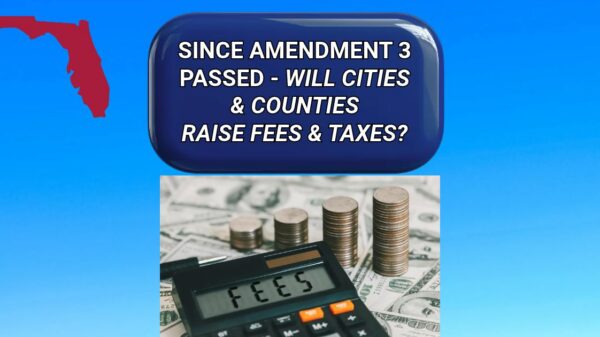
We’re going to get fee’d to death.
Florida TaxWatch, a fiscally conservative organization, came out against Amendment 3.
The James Madison Institute presented the pros and cons without taking a position.
There’s also been widespread criticism of how the proposal was developed.
And I blame both sides of the process.
As much as I’m a fan of the governor, state Republicans dropped the ball by not conducting a yearlong discussion about property taxes.
The proposal came too late. There should have been an extended debate about the details and possible consequences.
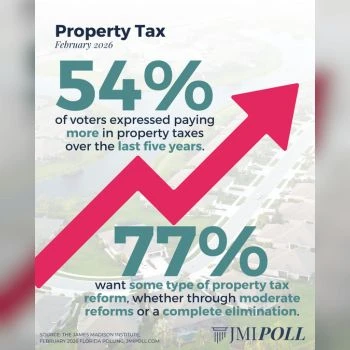
Polls show that people want property tax cuts. This particular proposal just isn’t selling.
Matt O’Hern: Completely agree.
Sometimes it takes an initial attempt to get the vetting process started.
But as you said, that process should have happened before the legislation was even crafted, in my opinion.
Ed Dean: Absolutely.
It took us 20 years to get school choice. Why should it take just a few years to get property tax reform right?
We’re talking about people’s livelihoods.
Nobody wants to keep paying property taxes on a home they’ve already paid off.
My grandparents’ home is paid off, but they still receive a property tax bill that continues to increase.
However, this isn’t necessarily the right way to address the problem.
Their overall cost of living could actually go up.
Could Property Tax Changes Hurt the Housing Market?
Ed Dean: The Florida Realtors have supported property tax changes in the past, and I respect the organization.
But I don’t know whether this proposal would actually increase home sales.
It’s a tough sell.
One concern is that local governments could replace lost property tax revenue with additional fees.
Another involves property assessments.
Most property owners aren’t paying the maximum possible amount based on their home’s value.
And when you talk about changing assessment caps on businesses from 10% to 5%, many businesses aren’t currently seeing their assessments increase by the maximum amount anyway.
My concern is that if this tax change goes through, property appraisers will face pressure to maximize allowable assessments, while counties look for every possible way to recover revenue.
Unfortunately, I think it could result in higher costs elsewhere.
Matt O’Hern: And they’re going to be inspecting homes using all kinds of new tools.
They’ll probably spend money upgrading those tools so they can identify improvements.
For example, they’ll be able to see that you built an extra deck in your backyard.
Ed Dean: The rental market is another major concern.
We talk constantly about housing affordability in Florida and across the country.
I think this could have a significant impact on renters.
I wouldn’t want to invest in rental properties knowing that my property taxes could be pushed higher.
As a landlord, I’d either have to absorb those costs or pass them along to the renter.
This proposal raises more questions than it answers about whether people would actually receive meaningful financial relief.
Should Florida Focus on Local Government Spending First?
Ed Dean: It’s a great debate, and we’re covering both sides.
Whether this would actually stimulate the housing market remains an open question.
I agree with Kaitlin that we need to focus more closely on spending at the local level.
That’s not really being addressed.
Instead, the discussion keeps coming back to cutting government services.
I think the debate needs to focus on a simple question: What’s essential, and what isn’t?
Kaitlin Colgate: Exactly.
And look at the governor’s proposal to establish a fund for smaller municipalities that might struggle to maintain essential services because of lost revenue.
But what happens if Democrats return to office and get to decide which services are essential and which municipalities receive funding?
Who gets the money, and who doesn’t?
Those details haven’t been fully fleshed out, either.
Ed Dean: That’s an important point.
We’re going to continue covering this issue over the next several weeks because I expect the Realtors to advertise in favor of the amendment.
On the other side, you’ll have organizations representing cities, counties and law enforcement.
And when the most popular elected official in your county is the sheriff, that carries a lot of political weight.
Those endorsements and objections could make a major difference in how voters approach the amendment.
It’s been a good discussion.
Kaitlin Colgate, Matt O’Hern, I’m your host, Ed Dean.
All of this right here on The Florida Daily Show.