Florida’s Hispanic business community knows that public safety and economic opportunity go hand in hand. Families won’t shop, invest, or grow roots in communities where they don’t feel safe. Small businesses can’t thrive when crime disrupts neighborhoods, deters customers, or puts employees at risk. That’s why smart, responsible investments in public safety matter; not just for law enforcement, but for all of us.
One such investment is license plate reader (LPR) technology.
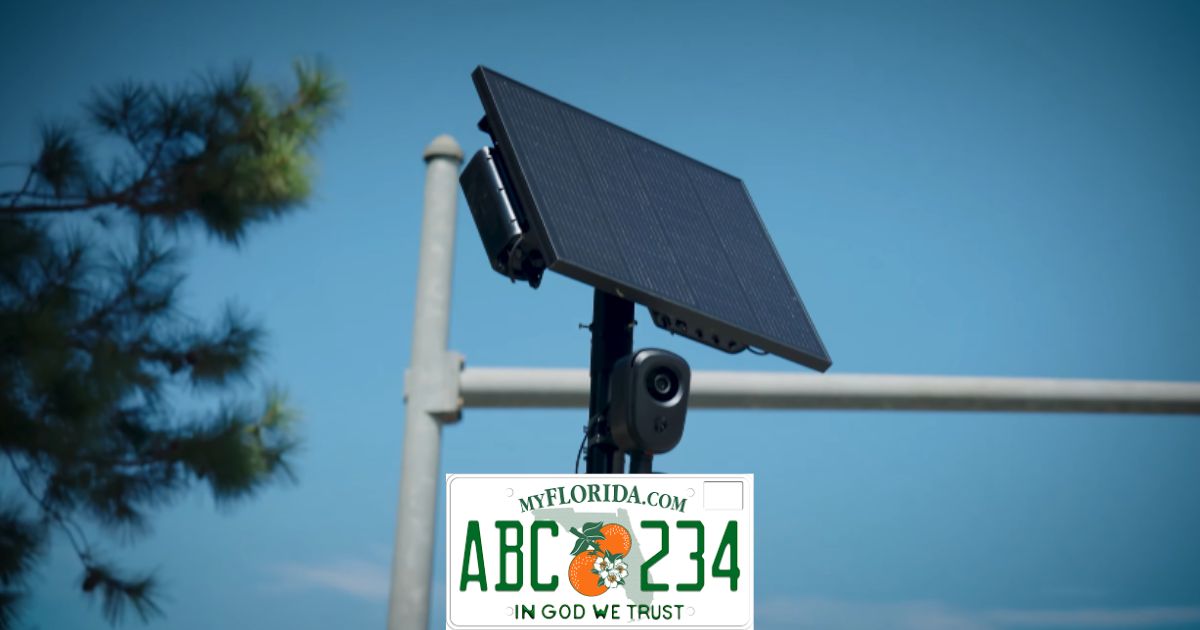
LPRs are not a theoretical tool or a futuristic concept. They are already being used across Florida to help law enforcement locate missing children, recover trafficking victims, solve hit-and-run cases, and find dangerously impaired drivers before more harm is done. These systems capture images of license plates and visible vehicle characteristics on public roadways—not personal identities—and alert law enforcement when a vehicle connected to a crime, AMBER Alert, or BOLO enters their jurisdiction.
When seconds matter, LPRs give law enforcement the ability to act quickly and decisively.

Consider St. Johns County, where our local law enforcement heroes recently credited license plate readers with helping recover hundreds of stolen vehicles and locate more than 100 missing persons. These are not abstract wins. Each recovered vehicle represents a family spared financial hardship. Every missing person found is a human life brought home—often to loved ones who have been living in fear and uncertainty.
In Manatee County, license plate reader technology played a role in helping law enforcement apprehend a fugitive wanted in connection with child abuse charges dating back decades. By flagging a suspect vehicle in real time, officers were able to step in where traditional investigative methods alone might have fallen short.

These stories reflect what survivors of crime already know: technology, when used responsibly, can be the difference between ongoing trauma and a second chance at safety.
Some critics raise concerns about privacy. Those concerns deserve to be acknowledged, not dismissed. But they should also be grounded in facts. LPR technology focuses on vehicles in public view, not people. Data policies are set by local agencies, with clear rules around access, retention, and oversight. Courts across the country (including recent federal rulings) have consistently upheld the constitutionality of this tool when safeguards are in place.

Importantly, isolated incidents of misconduct should lead to stronger accountability, not the elimination of tools that overwhelmingly protect innocent people and help survivors. We do not ban fire trucks because someone once misused a siren. We establish rules, transparency, and consequences. The same principle applies here.
Florida faces real challenges tied to trafficking, organized crime, and mobility across major highway corridors. Traffickers and criminals exploit speed, anonymity, and jurisdictional gaps. Law enforcement must be able to match that reality with modern tools.
As business leaders, community advocates, and parents, we all share the same goal: safer neighborhoods where families can flourish and commerce can grow. License plate readers are one of many tools that help make that possible. Florida should choose smart solutions, survivor-informed policies, and responsible innovation. Our communities depend on it.
Julio Fuentes is the President & CEO of the Florida State Hispanic Chamber of Commerce