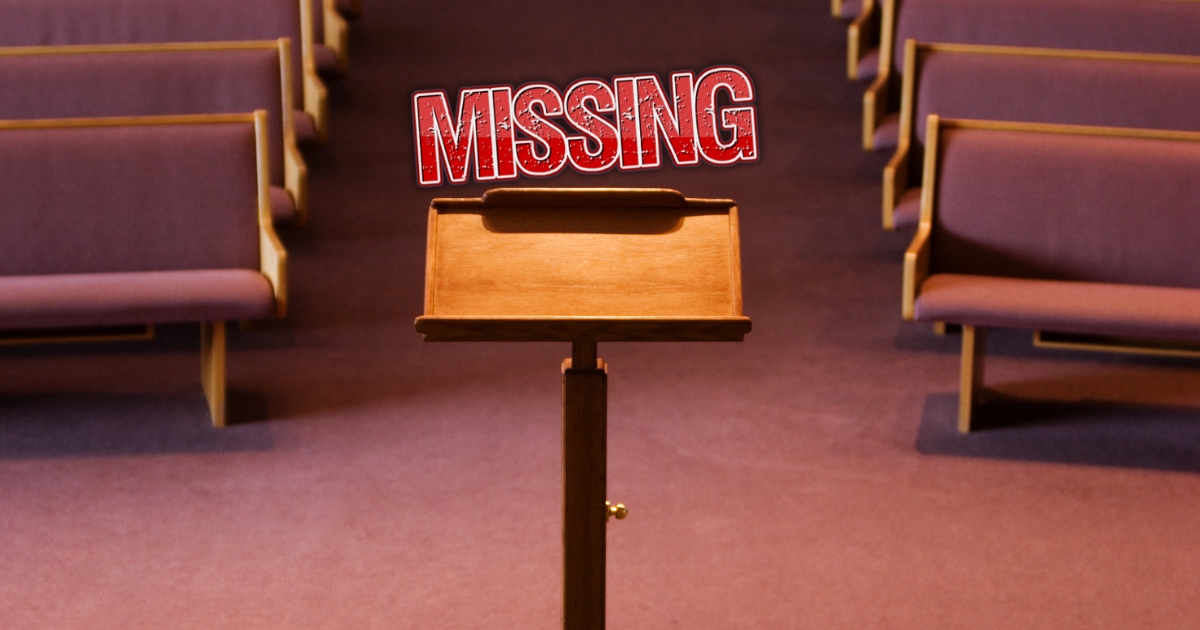
A recent report from Axios revealed that America’s pastor pipeline is collapsing, and fewer Americans want to become pastors.
U.S. Master of Divinity School admissions under the Association of Theological Schools (ATS) declined by 14% from 2020 to 2024.
According to the Center for Applied Research in the Apostolate at Georgetown University, Catholic seminaries saw a drop among graduate and college students during the 2024-2025 academic year,
The ATS Master of Divinity says admission among Black Protestant students all fell between 2000-2020 by 31%.
The Associated Press reported that figures from the Hartford Institute showed that just over four in 10 clergy surveyed in fall 2023 had seriously considered leaving their congregations since 2020.

From 2024-2025, around 15,000 churches closed their doors.

Which areas are the hardest hit by the decline in pastors?
Axios reported that in rural locations and predominantly black churches, many pastors are part-time, working at the same time as a full-time position somewhere else.
Some researchers looking at the data conclude that Catholic parish closures are also being hurt by the lack of clergy.
Axios reports that some catholic groups are seeing a struggle to recruit priests and have faced an “all-time low of priests assigned to our 80 parishes.”
But the one group that isn’t seeing a drop is the Pentecostal church.
The Assemblies of God, which is a denomination tied to the Charismatic Movement and represents the largest faction within the Pentecostal church, reports that attendance at its churches is up by almost 9%. Of all major Protestant denominations, leaders of the Assemblies of God have consistently been among the most vocal supporters of President Trump. The Assemblies of God support a doctrine widely known as the “Prosperity Gospel”, also known as the “health and wealth gospel.” It is a belief that God rewards strong faith with financial prosperity, physical healing, and personal happiness. It teaches that believers can “Name and claim” their desires and that donating money to religious ministries guarantees a financial return. The doctrine has been widely criticized by other protestant denominations.