PORT ST. LUCIE, Fla. — Democratic Florida House candidate Wayne Richter has made attacks on Republican Anthony Bonna a central feature of his campaign for District 85. But several of Richter’s accusations run into a serious obstacle: the public record.
From labeling Bonna the “Tax Hike King” to questioning his commitment to local government, Richter’s campaign has circulated assertions that are contradicted by official records or omit significant facts.
The question is no longer simply whether Richter is running a negative campaign. It is whether the claims he is asking voters to believe can withstand basic fact-checking.
The “Tax Hike King” Who Helped Lower Tax Rates
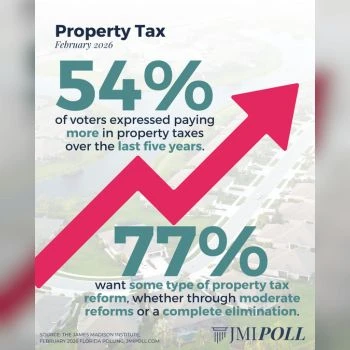
Richter’s campaign has branded Bonna the “Tax Hike King,” a striking accusation against a city council member whose tenure coincides with repeated property tax rate reductions.
Port St. Lucie approved its 11th consecutive annual millage-rate reduction in September 2026. The city’s municipal property tax rate has fallen approximately 25% since 2016.
Those figures are not campaign talking points. They are part of the city’s documented financial record.
Although rising property values can increase individual tax bills despite lower rates, Richter’s attack fails to acknowledge a fundamental distinction between raising tax rates and changes in the total amount homeowners owe.
Richter Claims Bonna Failed to Defend Local Government Authority, Despite Statewide Recognition for Bonna as a Home Rule Hero
Richter has accused Bonna of failing to defend home rule and local control.
Yet in 2023, the Florida League of Cities recognized Bonna as a Home Rule Hero for his advocacy on behalf of municipal government.
That distinction directly challenges Richter’s portrayal of Bonna’s record.
Criticism of specific votes is fair game. Suggesting a public official did nothing to defend local control while overlooking a statewide organization’s recognition for that very work gives voters a misleading picture.
Even Bonna’s Time in Office Gets Distorted
Richter’s campaign has also claimed Bonna served two full terms on the Port St. Lucie City Council.
He did not.
Official records show Bonna began serving in December 2021, roughly 11 months before his next term began in November 2022.
This is not a complicated policy disagreement. The dates are publicly available and easily verified.
Richter has additionally labeled the 39-year-old Bonna a “career politician,” a subjective insult directed at someone who has spent approximately five years in elected office.
The Utility Fee Claims Deserve the Same Scrutiny
Richter has accused Bonna of repeatedly raising stormwater, sewer and solid waste fees over five consecutive years.
Bonna disputes the characterization. According to information provided to Florida Daily, he was the only council member to vote against a stormwater fee increase during one of the years Richter cites.
The individual votes should be compared with the campaign’s claims before declaring every accusation false.
Richter’s attacks concerning garbage collection charges also leave out the city’s $24 million settlement with former contractor Waste Pro and the subsequent decision to return settlement proceeds to qualifying property owners through assessment credits.
That financial context matters. A campaign cannot present an adequate account of municipal costs while ignoring major developments affecting what taxpayers ultimately pay.
The Accusations Don’t Stop There
Richter reportedly claimed Bonna rejected an invitation to appear on the KC Ingram Show. Bonna disputes that account, and information provided to Florida Daily indicates the host confirmed in writing that she never told Richter Bonna had declined.
Richter has also challenged the city’s position on accessory dwelling units, raising questions about whether he accurately described an ordinance or merely a policy proposal.
And his criticism of Bonna’s property tax statements appears to overlook that Port St. Lucie controls only a fraction of the typical homeowner’s consolidated tax bill.
Each of these allegations deserves examination against the underlying documents and statements, not merely repetition in campaign materials.
Political Attacks Don’t Get a Free Pass on the Facts
Negative campaigning is a familiar feature of Florida elections. Misrepresenting verifiable records should not be treated as ordinary political disagreement.
The Bonna-Richter contest offers a clear example of why voters should examine the claims appearing in their mailboxes rather than accepting campaign slogans at face value.
Bonna’s record is open to legitimate scrutiny. So is Richter’s description of that record.
When a campaign makes specific accusations about votes, taxes, and years in office, those claims should survive comparison with official documents.
A catchy attack line may fit on a campaign mailer. That doesn’t make it a fact.