With Democrats yelling Tax the Rich and Republican messaging in shambles, voters are wading through lots of noise in the final stretch to the 2026 midterm.
During a recent political roundtable, Ed Dean, Tom Gaitens, Caitlyn and Lindsay discussed the challenges facing both parties, including Democratic messaging on affordability, Republican concerns about tariffs and inflation, and whether President Donald Trump’s campaign appearances can motivate enough voters to change the election’s outcome.
While the panelists generally expected Republicans to perform well in Florida, they expressed differing opinions about the party’s chances of maintaining control of the U.S. House and Senate.
Democrats Face Questions About Their Economic Message
The discussion began with criticism of Democrats’ messaging on affordability and the economy.
Dean played a clip of Arizona Democratic Sen. Mark Kelly responding to questions about how Democrats intend to lower costs for American families.
Kelly emphasized the importance of winning control of Congress and described legislation that would raise taxes on individuals earning more than $1 million annually while providing tax relief to individuals and couples earning up to approximately $160,000.

Although Dean credited Kelly for offering a specific policy proposal, he questioned whether the approach represented anything new.
“At least he tried to give an answer instead of just avoiding it,” Dean said.
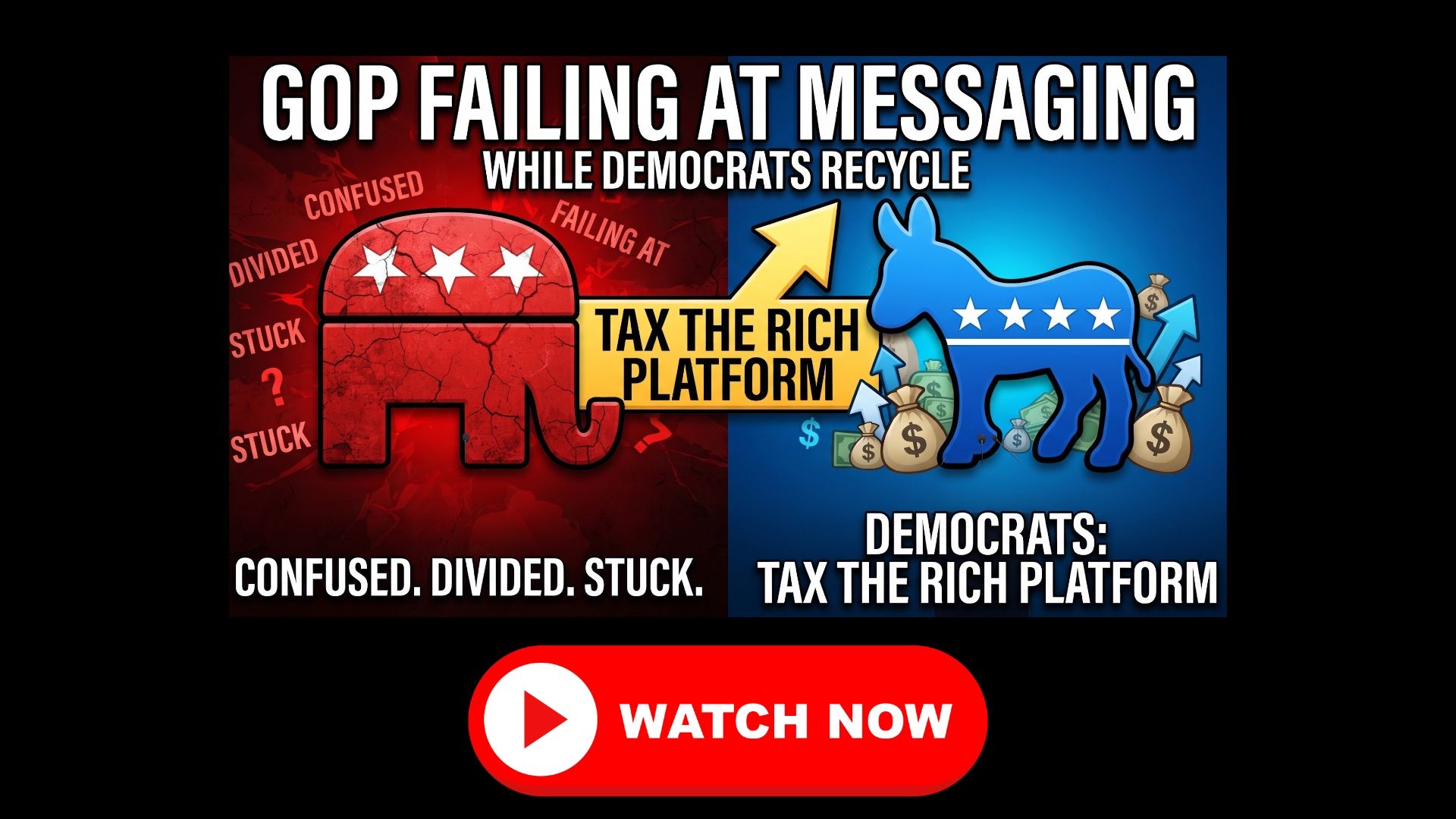
The panel criticized what it described as Democrats’ repeated reliance on taxing wealthy Americans and redistributing income.

One panelist pointed to the economic difficulties of the 1970s, arguing that progressive taxation and greater government intervention had failed to produce prosperity.
The discussion also turned to comedian and political commentator Bill Maher, whose criticism of progressive positions was played during the program.
Panelists argued that Democrats risk alienating moderate voters when they move beyond economic concerns and embrace controversial positions on policing, immigration, gender and government spending.
Dean summarized his criticism of both parties’ messaging strategies.
“Republicans have something they can sell, and they can’t sell it. Democrats, nobody’s buying this, and they still want to sell it,” he said.
Concerns About Government Spending and Health Care
The panel also questioned proposals to expand government involvement in health care, including Medicare for All.
Caitlyn discussed her experience receiving medical treatment through the Department of Veterans Affairs, arguing that problems within the VA system demonstrate the challenges of expanding government-managed health care.

She acknowledged that access to private medical providers through VA programs had improved some aspects of care but maintained that government approval requirements continued to create difficulties.
The panelists also discussed federal spending and government contracting.
Lindsay, drawing on her previous experience as a recruiter working with government contractors, described situations involving multiple subcontractors receiving portions of federal contract payments.
She argued that these arrangements can contribute to unnecessary government expenses.
The broader consensus among the panelists was that Republicans should place greater emphasis on reducing federal spending rather than focusing almost exclusively on tax cuts.

Can Trump’s Campaign Appearances Help Republicans?
The conversation then shifted toward the upcoming midterm elections and whether President Trump’s campaign appearances can help Republicans overcome unfavorable political conditions.
Dean played a clip of political analyst Brit Hume questioning whether Trump’s campaign activity had generated meaningful momentum.
Hume observed that political parties sometimes experience late shifts in public opinion when an issue or event changes the direction of a campaign. However, he said he had not seen convincing evidence of such a shift benefiting Republicans.
Tom expressed pessimism about Republicans retaining control of the House, citing the historical difficulties faced by the president’s party during midterm elections.
He also suggested that tariffs and the conflict involving Iran had weakened Republicans’ political standing.
However, Tom introduced another possibility: Republican voters who support Trump but refuse to participate in political polling.
According to Tom, a source within the administration had indicated that the White House was aware of a segment of MAGA voters who routinely decline to respond to pollsters.
He suggested that this could mean polling underestimates Republican support and that Trump’s appearances in traditionally Republican states are intended to mobilize those voters.
“They believe this is one of the reasons they’re going to these red states, to draw out even deeper and larger turnouts from the base,” Tom said.
Although he still expected Republicans to lose ground nationally, he acknowledged the possibility of unexpected victories if Republican turnout exceeds expectations.
Florida Governor’s Race: Could David Jolly Attract More Republican Voters Than Polls Suggest?
The panel spent part of the discussion examining Florida’s gubernatorial contest between Republican Byron Donalds and Democrat David Jolly.
Dean questioned whether Donalds could face greater Republican crossover voting than current polling suggests.
He referenced a Mason-Dixon poll indicating that approximately 4% of Republican voters supported Jolly, suggesting that the actual percentage might be higher.
Dean said he personally knew voters who supported Trump and Florida Gov. Ron DeSantis but intended to vote for Jolly because they were dissatisfied with Donalds.
“I think that’s an undercount,” Dean said of the crossover figure.
Tom argued that Trump’s decision to campaign in Florida could reflect similar concerns within Republican political circles.
He suggested that Trump’s campaign schedule could provide clues about where Republicans believe additional voter mobilization is necessary.
Despite those concerns, other panelists remained confident that Republicans would win Florida’s statewide elections.
Caitlyn predicted a Republican sweep in Florida but cautioned that the party should not expect to replicate DeSantis’ approximately 19-point gubernatorial victory in 2022.
She attributed that expectation partly to broader voter fatigue and dissatisfaction with current economic conditions.
Tariffs, Inflation and Voter Fatigue Could Hurt Republicans
One of the roundtable’s most significant disagreements involved whether Republicans could face a backlash from their own voters.
Lindsay argued that many voters who supported Trump and worked to elect Republicans have become frustrated by tariffs, continued economic uncertainty and American involvement in another foreign conflict.
She described an electorate exhausted by consecutive election cycles and increasingly disappointed with the results.
“We’re not anywhere closer to where we wanted to be in 2024,” she said.
Dean agreed that tariffs could be creating economic and political problems for Republicans.
He pointed to concerns about inflation, diesel prices, interest rates and weak home sales, arguing that a more favorable economic environment would have strengthened Republicans heading into November.
Dean also raised the possibility of a Republican protest vote.
Rather than voting for Democratic candidates, some dissatisfied Republicans might simply decline to vote in certain races, particularly those involving Trump-endorsed candidates.
Lindsay agreed that such an outcome was possible.
She argued that some voters who volunteered, donated money and defended Trump during previous elections now feel that the administration has failed to deliver the economic improvements they expected.
The discussion also touched on Republican Rep. Thomas Massie, whom Lindsay referenced while expressing frustration with the direction of the Republican Party.
Panelists Split on Control of Congress but Favor Republicans in Florida
As the conversation concluded, the panelists offered their expectations for the midterm elections.
Tom predicted that Republicans would lose control of the House, pointing to the historical tendency for the president’s party to suffer congressional losses in midterm elections.
Caitlyn was somewhat more optimistic. Although she expected Republicans to lose at least one chamber, she believed the party could retain control of the Senate.
Other panelists similarly suggested Republicans could lose the House while maintaining or improving their Senate position.
On Florida, however, the panel was substantially more unified.
Despite acknowledging that Donalds might face Republican defections and that economic dissatisfaction could affect turnout, panelists generally predicted that Republicans would win the state’s major statewide races.
The discussion ended with questions about Trump’s endorsement record and whether Republican candidates closely associated with the president could face difficulties similar to those experienced by some Trump-backed candidates in previous elections.
The Bottom Line
The panel’s central conclusion was that Republicans face a challenging national political environment, even as Florida remains favorable territory for the GOP.
Several major factors could determine the final results:
- Republican turnout: Whether Trump’s campaign appearances motivate voters who may not be represented accurately in public polling.
- Economic dissatisfaction: Whether tariffs, inflation, interest rates and foreign-policy concerns lead Republican voters to stay home or vote against the party.
- Democratic messaging: Whether Democrats can successfully focus the election on affordability without alienating moderate voters on cultural and ideological issues.
- Florida crossover voters: Whether Jolly attracts more Republican support than current polling indicates.
- Control of Congress: Whether Republicans can overcome historical midterm disadvantages and retain at least one chamber.
With Election Day approaching, the panelists agreed that voter turnout, economic sentiment and Republican enthusiasm could prove decisive.
Although they differed over the national outcome, their prevailing expectation was that Democrats have a strong opportunity to capture the House, Republicans remain competitive for the Senate, and Florida’s statewide races still favor the GOP.