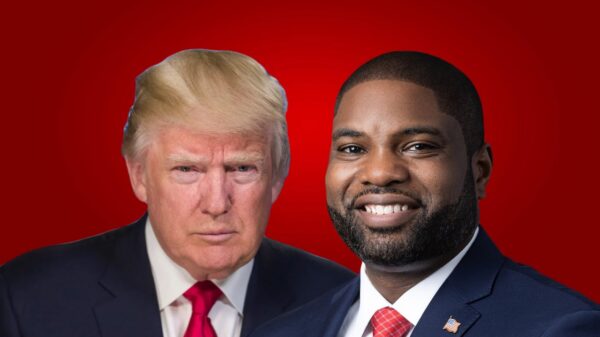
Florida Daily publisher Ed Dean discusses the bizarrely low level of Republican enthusiasm about Byron Donalds and the 2026 race for governor.
Below is a transcript of the show: Here is the cleaned transcript, with repeated words, filler, false starts and obvious transcription errors removed while preserving the speakers’ arguments and conversational tone.
HOST ED DEAN: I have Matt O’Hern with me, and Lindsay Randall is back from vacation. I kept jokingly calling Lindsay an EBT or SNAP-benefit user because she took an entire week off, and I needed her here for television and radio.
LINDSAY: You have to unplug for a little while. You have to do it.
HOST: Matt, you’ll like this story.
Lindsay and I were talking about it on my radio show today, which is the biggest show in the state.

Last week, we discussed how this may be one of the most boring Florida governor’s races I’ve ever covered—probably the most boring. I go back to the days of Jeb Bush, when I was about 16.
Normally, when I receive an email or phone call from a Republican listener, it goes something like this: “Ed, I know who I’m voting for for president. I know who I’m supporting for the Senate. But there’s a nonpartisan race. Who do you recommend?”

The same thing happens with Democratic voters. They usually ask about nonpartisan races, county commission contests or judicial elections.
This year, it’s the opposite.
Friends and listeners from around Florida are sending me pictures of their ballots. Their selections for chief financial officer, county commission, school board and state legislative races are already filled in.
The one race they haven’t decided is the Republican primary for governor.
Matt, that could mean several things.
Maybe people haven’t been paying attention to the governor’s race. Maybe the Trump endorsement overwhelmed everything. Maybe voters aren’t impressed with the candidates. Maybe nobody cares. Or perhaps the race is less exciting because Gov. Ron DeSantis hasn’t endorsed anyone.
What do you think is happening?
MATT: I think the biggest factor is that Trump endorsed Byron Donalds very early.
Donalds became a known commodity because he was Trump’s choice. Trump’s most loyal supporters make up roughly half of the Republican Party, and many of them immediately lined up behind Donalds.
The other half of the party has to choose among the remaining candidates, none of whom has raised anywhere close to the amount of money Donalds has.
That limits their access to voters. They have to depend on interviews and other earned-media opportunities.
Donalds also hasn’t provided much material for discussion because he refuses to debate. There is very little current information to analyze or attack him over.
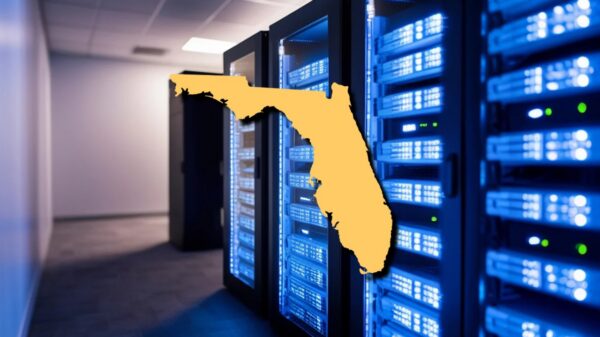
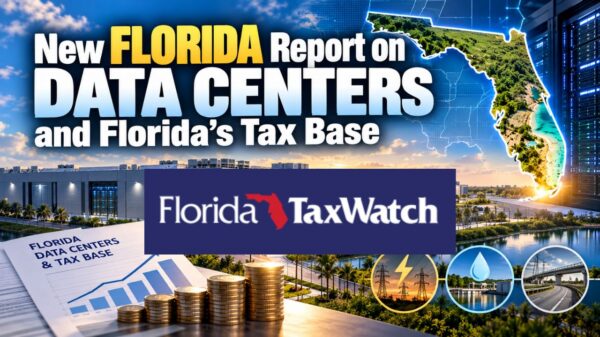
Critics can point to past positions, such as his support for data centers or charter schools. I’m not saying charter schools are bad, but Donalds isn’t making much current news.
That leaves a group of second-tier candidates who are mainly followed by political junkies, and those people may represent only about 10 percent of voters.
We’re now less than a month from the primary, and Donalds is counting on all those factors working in his favor.
HOST: We had Ed Lynch on the radio show this morning. He’s a professor at Palm Beach State College and has his own podcast.
He said something we often say on this show: We don’t endorse people. We endorse solutions.
We’ve had all the candidates on the program. Ed Lynch said he isn’t a major Byron Donalds supporter and isn’t endorsing anyone, but he believes Paul Renner is the only candidate with a record of working effectively with the governor.
The problem for Renner is that he supported the post-Parkland legislation that raised the minimum age for certain firearm purchases from 18 to 21 and expanded waiting-period requirements.
Gun-rights voters haven’t forgotten that.
Jay Collins, the lieutenant governor, is someone I’ve always gotten along with, but he doesn’t appear to be gaining much traction.
Then there’s James Fishback.
I’ve never seen a more unfocused governor’s race in my lifetime. Is “unfocused” the right word?
LINDSAY: I completely agree.
I travel around town and throughout different parts of Florida, and I’ve seen only a handful of signs for the governor’s race. That is bizarre.
Donalds has raised so much money that you would think his campaign signs would be everywhere. I haven’t seen a single Donalds sign.
I’ve seen more Renner signs, even though he is apparently polling near the bottom.
I think that shows voters aren’t excited about Donalds. He is only as prominent as he is because of Trump’s early endorsement.
Trump is also facing criticism because of the war with Iran. He repeatedly promised that the United States would get out of it, but that hasn’t happened.
I thought there might at least be a deal before Independence Day, given all his statements suggesting an agreement was close. But no deal was completed.
I think that is hurting enthusiasm for Donalds.
Couple that with DeSantis keeping his powder dry and refusing to endorse anyone. There are obviously tensions between DeSantis and Donalds, and the whole situation is unusual.
HOST: I’m looking at a University of North Florida poll that Donalds’ campaign promoted this past week.
It showed Donalds leading David Jolly in a general-election matchup, 46 percent to 41 percent, with another 6 percent undecided.
MATT: That’s essentially a statistical tie.
HOST: It also doesn’t account for everyone. Forty-six plus 41 equals 87, and another 6 percent brings it to 93.
MATT: The rest may have selected another candidate.

HOST: Right, but the report I’m looking at doesn’t list those responses.
Either way, 46 percent to 41 percent isn’t overwhelming.
Democrats are enthusiastic about voting for Jolly.
MATT: Even far-left progressives may vote for him.
HOST: Florida has been controlled by Republicans for nearly three decades, and Democrats are desperate to win.
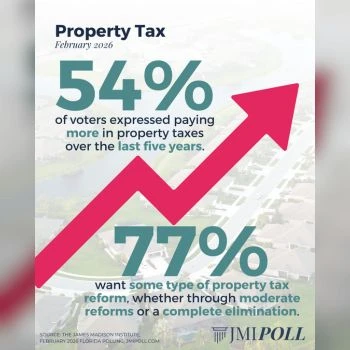
If I were creating Democratic campaign advertisements, I would focus on years of rising property-insurance premiums and higher property taxes under Republican leadership.
Republicans can’t only worry about their own voters. They have to focus on independents.
LINDSAY: Look at the enthusiasm during DeSantis’ reelection campaign.
There were signs and bumper stickers everywhere. People were actively campaigning and excited.
I live in a fairly Republican area, and I usually have campaign volunteers knocking on my door. Nobody from Donalds’ campaign has come by.
It’s bizarre.
HOST: Donalds’ campaign has actually visited my neighborhood.
LINDSAY: They haven’t visited mine.
MATT: They probably don’t bother walking around Orlando.
HOST: Matt, you live in a wealthy Republican area of town.
MATT: No, I don’t. Maxwell Frost is my congressman. I live near the edge of his district.
HOST: I’m probably going to receive hate mail for saying this, both from the radio audience and from people watching this video.
This isn’t meant as an attack on the other candidates. It’s simply that nobody has done enough to distinguish himself.
Renner, Bobby Williams, Fishback and the others spent too much time trying to get booked on Fox News.
I love Fox News, but over the past three months, they should have been running radio advertisements and appearing regularly on talk radio, where the Republican base actually listens.
More people listen to talk radio during the day than watch Fox News.
They should have been saying, “Here are the differences between me and Byron Donalds.”
I also don’t think Donalds’ old marijuana arrest is effective as an attack anymore.
MATT: They also should have appeared on video programs and podcasts like this one. They should have used alternative media.
HOST: Their strategy has been horrible.
Donalds has a record as a big-government spender. We’ve documented that at Florida Daily.
He was very quiet about Amendments 3 and 4. He disagreed with DeSantis and agreed with Kamala Harris on issues related to critical race theory. There are videos of him discussing George Floyd and related racial-justice issues.
Those are substantive areas opponents could have used.
I don’t think the old arrest matters to voters anymore. After the Bill Clinton era and Trump’s infamous comments, voters often ignore personal scandals—at least when they involve their own side.
The more relevant question is where Donalds stands on policy.
I’m not even sure the data-center issue is that significant.
MATT: Don’t dismiss that issue.
HOST: I’ve seen some polling. I don’t think it’s a major issue with voters right now. I think it’s mainly an issue among conspiracy-minded people.
MATT: That’s not true.
Data centers are a major concern in rural communities, not just among conspiracy theorists. Look at what people are discussing and what they’re angry about.
HOST: Rural voters are still a relatively small part of Florida’s overall electorate.
I think the cost of living is a much bigger issue. Trump said prices would come down, but they haven’t. The tariffs haven’t worked.
Gas prices are higher than they were under Biden in some areas of Florida.
The larger point is that Trump has never practiced fiscal conservatism.
But do you honestly think artificial-intelligence data centers are a major political issue?
MATT: Yes, absolutely.
LINDSAY: I agree.
HOST: I don’t know. I saw polling on Fox News that didn’t show it as a leading issue.
MATT: You’re always saying you don’t believe polls.
HOST: I don’t trust many of the polls in this Republican primary because they’re all over the place.
MATT: If pollsters aren’t asking voters about data centers, the issue won’t appear in the results.
Look at news outlets, mainstream or independent, and look at what readers are discussing.
It isn’t only data centers. It’s artificial intelligence generally. People are afraid AI will eliminate their jobs and affect their children’s futures.
HOST: I agree that concerns about AI and the growth of Big Tech are significant.
When people say Big Tech is scarier than government, I disagree. People should be most concerned when government and Big Tech work together.
I know data centers are promoted as sources of additional tax revenue. I’m only saying that they aren’t yet being proposed in everyone’s backyard.
Matt believes this is already a major issue. I believe technology is a major issue, but I’m not convinced data centers themselves are the biggest concern.
LINDSAY: A couple of years ago, the loudest critics may have seemed like conspiracy theorists.
But as more data centers have been built and the public has learned more, opposition has become broader.
I agree with Matt that voters are angry about it.
Combine that with the cost of living and the overall lack of affordability.
HOST: Now you’re adding other issues. I was talking specifically about AI.
LINDSAY: You have to consider all of it together.
Voters feel disenfranchised. They’re tired of hearing rhetoric without seeing results.
They voted for candidates promising small government, spending cuts, fewer wars and lower interest rates. None of those things has happened.
The only area where they may feel there has been meaningful progress is immigration.
HOST: People are afraid of losing control. I think that is one of the biggest issues.
Donalds will probably win the primary, but I find him unimpressive.
David Jolly isn’t much better.
MATT: Donalds may be unimpressive, but he has raised a great deal of money and has no—
HOST: The primary will probably have low voter turnout.
MATT: Very low.
LINDSAY: I agree. It may be lower than what we’ve seen in past primaries.
MATT: That benefits Donalds.
HOST: You think so?
MATT: Yes, because the conservative opposition is divided among several candidates, and those candidates waited too long to consolidate.
At least two of them should have dropped out by now.
HOST: Before we finish, let’s talk about the grassroots activists.
The candidates include Williams, Fishback, Renner, Collins and Donalds.
Matt, which candidate do you think has the most support among Republican activists?
MATT: That’s difficult because the activist base is very divided.
The most vocal group with a noticeable amount of support isn’t behind Jay Collins. It’s behind Fishback.
I’m not sure Fishback has more supporters overall than Collins, but his supporters are louder and more active.
HOST: Interesting. I have a different answer.
Lindsay, who do you think activists support?
LINDSAY: I think experienced activists who understand Florida politics are leaning toward Renner.
Younger activists are more likely to support Fishback.
HOST: I agree that voters in their 20s may be leaning toward Fishback.
Overall, I think Renner has the most support among established grassroots activists. That isn’t an endorsement. It’s simply my assessment.
MATT: Renner is in a difficult position because his greatest asset is also a liability.
His biggest qualification is that he served as speaker of the Florida House, but many voters now see the Legislature as part of a flawed system.
HOST: I also think the gun vote hurts him.
Good discussion today.
Lindsay Randall is finally back from her month-long vacation. I wish I could take that much time off.
Matt, thank you as always.
Visit FloridaDaily.com for more news and commentary. We’ll do this again next time.