As Christmas Day approaches, millions of Christians will return to their local church to hear the story of Jesus’ birth and the days and months that followed. Despite the fact that most Christians and non-Christians are familiar with the story of the three wise men visiting Jesus, the details of those men remain a mystery to many.
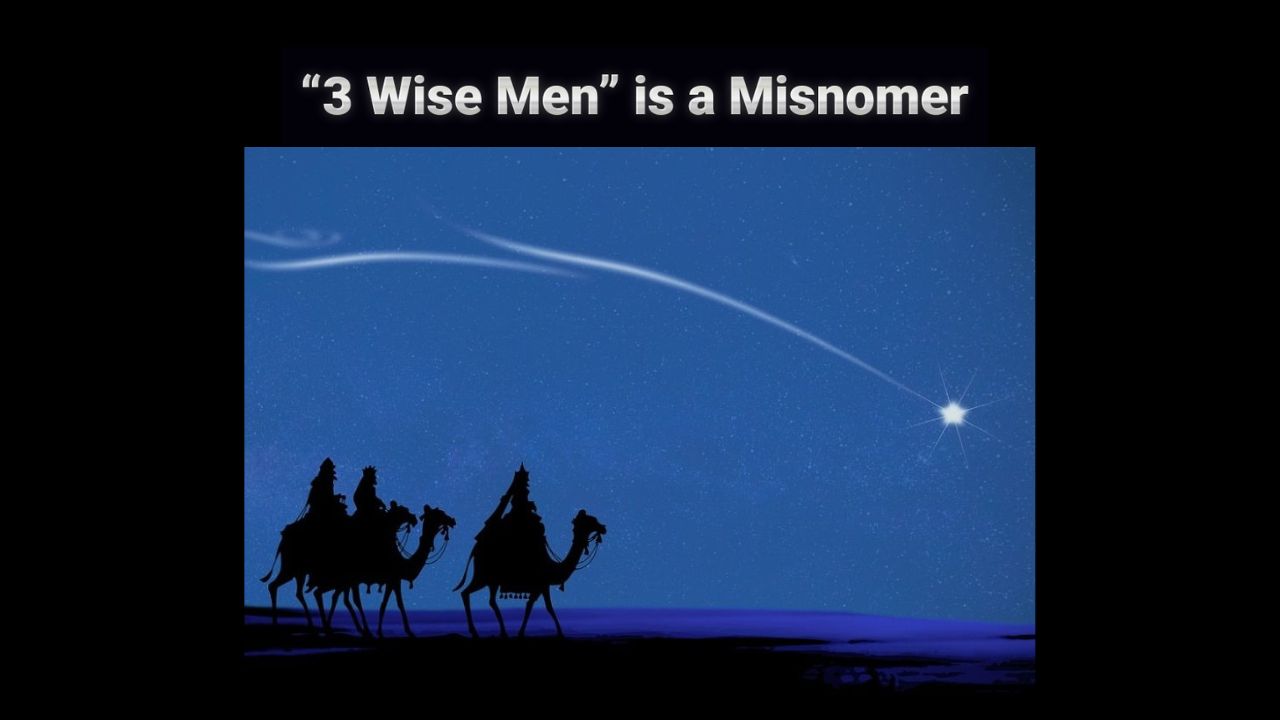
If you go strictly by the biblical text (Matthew 2), the Bible never says there were three visitors, and it never calls them kings. It reads “Magi from the East” came to honor Jesus (Matt. 2:1–12). The “three” comes from three gifts (gold, frankincense, myrrh), not from a headcount in Matthew. Later Christian tradition standardized “three,” with early church interpretation often traced to that logic.
What “Magi” likely meant in Matthew’s world
Scholarly discussion in divinity-school settings tends to start with the Greek word magoi (magi). Duke Divinity School Scholars note that the word magoi is tied to words like “magician/sorcerer” and describes people known for reading the stars and interpreting “signs of the times,” sometimes viewed as an almost priestly class sought as advisers to rulers.
Rev. Samuel T. Lloyd III, who served as Divinity School Regent at the University of the South, explained the historical context behind the story that is widely accepted by popular culture.
“Where did we get the notion, for example, that there were three wise men?
There’s no mention of three in the text Dean Willman read at all.


It seems to come from the fact that there were those three gifts—gold, frankincense, and myrrh—and nothing says they were kings, no matter how many times we sing, “We Three Kings of Orient Are.”
That seems to come from the psalm appointed for today and from the book of Isaiah. In the reading, we heard about kings bringing gifts.

And you know those names for the kings—Gaspar, Melchior, and Balthazar—well, that doesn’t turn up until the 6th century.

And these travelers weren’t even necessarily wise.
Magi is the Greek word for magic.
Our best guess is that the Magi were Persian astrologers—wizards, spiritual technicians, we could call them.
Their role was to help people get a grip on the powers pressing in on them in their lives through horoscopes, divinizing, oracles, and wizardry.
So much of human religion, after all, seems to function as an attempt to control the powers pressing in on us from outside.
It was the job of the Magi to use their bag of tricks to help people manage what was happening.
Well, if the wise men weren’t necessarily wise, and they weren’t kings, and there weren’t necessarily three, then who were they?
Well, for one thing, they were foreigners—outsiders, Gentiles.
Matthew put at the center of the story of Christ’s birth this tale of travelers from Persia, which would be known today as Iran.
The Magi, we might say, were Iranians—or maybe Iraqis, or maybe people of Afghanistan.
It’s a sobering thought that among the first who worshiped Jesus as the Messiah, the Christ, were the ancestors of those whom we in the United States so often see now as our enemies.”
A Beeson Divinity School piece emphasizes what Matthew actually narrates: wise men from the East undertake a journey to worship Jesus, prompted by a star they interpreted as significant.
What we don’t know (and the Bible doesn’t tell us)
Exact number: could be 2, 3, 12, or more—Matthew doesn’t specify.
Names: “Caspar/Melchior/Balthasar” are later tradition, not scripture.
Exact country of origin: “from the East” is all Matthew says.