Two Miami condos can have the same asking price and monthly association dues, yet cost their owners very different amounts over the first year. One building may have money set aside for a roof replacement. Another may be getting bids for concrete repairs and discussing a special assessment. The difference may show up in the board minutes before it appears in the listing.
Use this Florida condo documents checklist as soon as you shortlist a resale unit. If you’re comparing condos for sale in Miami, record the association’s name and the building or tower address for each unit. That gives your agent the details needed to request the right records, especially in a development with several towers.
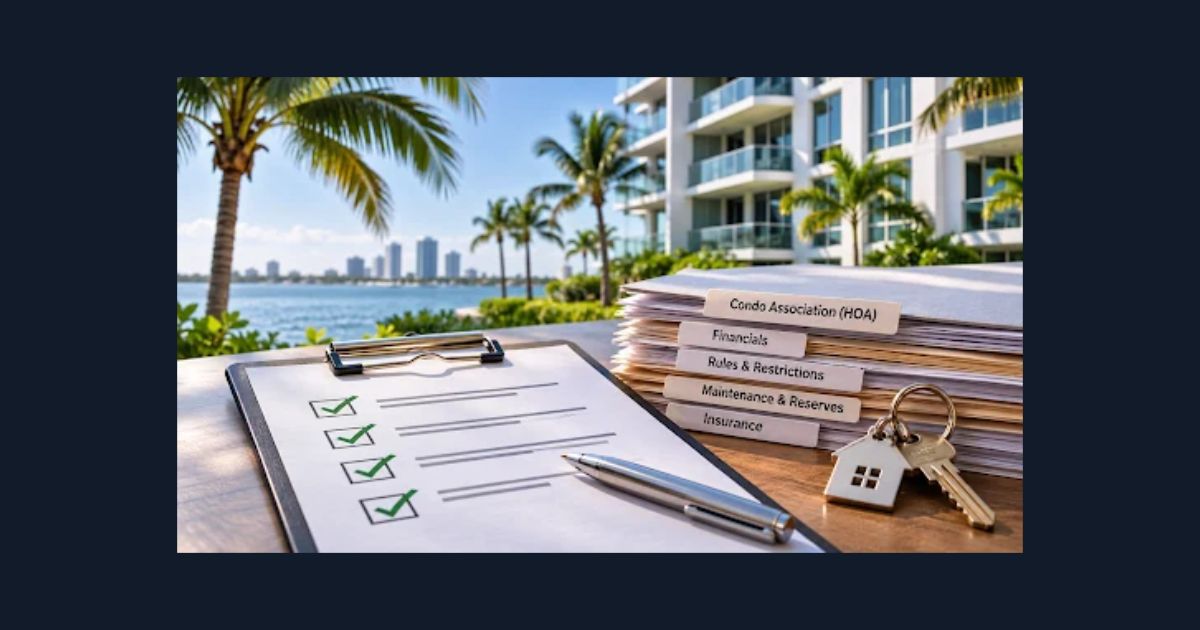
Documents to review before buying a condo in Florida
Ask the seller in writing for the current resale disclosure packet, including the association’s FAQ. Ask your agent to contact the association’s manager for recent board records, insurance information and updates on repairs. If the manager limits access to owners, ask the seller to request the records or authorize a representative to obtain them.
1. Declaration, bylaws and association rules
Get the declaration, articles of incorporation, bylaws, rules and any amendments from the seller. Check minimum lease terms, waiting periods, rental caps, pet restrictions and rules for guests and renovations. Look up how the unit’s parking space and storage are assigned.
Ask the manager: “Which rules will apply to me as a new owner, and will the parking space and storage transfer with the unit?”
2. Annual budget and financial statement
Ask the seller for the current adopted budget and the latest annual financial statement. Check what the regular dues cover, how much the association has set aside in reserves and how much the budget adds to those reserves this year. Look for changes in major expenses such as insurance.


Ask the manager: “What are the current dues for this unit, and has the board proposed an increase?”

3. Structural integrity reserve study
Ask the seller or manager for the latest structural integrity reserve study (SIRS), where applicable. Check which building components are due for repair or replacement, what the work is projected to cost and whether the adopted budget reflects the recommended funding schedule.
Ask the manager: “Which projects are coming up in the next few years, and how does the board plan to pay for them?”

4. Board minutes and special assessment notices
Request recent board minutes, meeting notices and any special assessment notices from the manager, through the seller if needed. Look for projects the board is discussing, bids it has received and charges it has approved. For an approved assessment, get the amount assigned to the unit, the installment dates and the remaining balance.
Ask the manager: “Which charges have been approved for this unit, and what other costs is the board discussing?”
5. Building inspection and recertification records
Ask the seller or manager for the milestone inspection summary and full reports, local recertification records and the developer turnover inspection report, where applicable. Check that each report covers the right building. Look for any required Phase Two inspection, recommended repairs and records showing which items have been completed or signed off by the building department, where applicable.
Ask the manager: “What work is still open, and can you share the latest engineer’s letter or permit status?”
6. Master insurance policy and renewal information
Ask the manager for the master policy declarations and renewal information. Check the limits, deductibles, renewal date and any applicable wind and flood coverage. Share the documents with your insurance agent to see what your unit-owner policy needs to cover.
Ask the manager: “Has the association received a renewal quote, and how would it fund a large deductible?”
7. Estoppel certificate
Ask your closing agent to coordinate the estoppel certificate with the association. Before closing, check the regular dues, unpaid amounts and any assessment installments shown for the unit against the purchase contract.
Ask your closing agent or attorney: “Which charges will be paid at closing, and who will pay the installments due afterward?”
Questions to ask the condo association before buying
When an inspection identifies work, ask management to walk you through the paper trail from the engineer’s findings to the latest bid, funding decision and repair status. A milestone inspection addresses the building’s structural condition. A structural integrity reserve study estimates major future costs and recommends how to fund them. If either document is missing, ask whether it applies to that building and request the relevant deadline or written status. Verify local recertification with the building department that serves the address.
If your offer depends on being able to rent the unit, ask whether the rental cap has already been reached and whether there’s a waitlist. For short-term rentals, verify local requirements for the address as well. If a pet or renovation requires approval, ask the manager for the written policy and application process.
What to send your agent, attorney and lender
- Real estate agent. Share the listing, current dues, any assessment notices and your plans for the unit. Ask the agent to confirm the unit-specific costs and request missing records before you settle on an offer price.
- Florida real estate attorney. Send the contract and condo rider, the documents you received and their delivery dates. Ask which review and cancellation deadlines apply, how missing records should be handled and how the contract allocates approved assessments and remaining installments.
- Mortgage lender. Send the building address, association contact, budget, insurance documents and any inspection or assessment records. Ask what your loan program needs for condo project review and whether unresolved repairs, assessments or insurance issues could affect approval.
Before you set your price, put three amounts side by side for each unit you’re considering: the recurring dues, the approved assessments you would pay and any proposed costs that are still uncertain. If you’re comparing condo listings on Bonadomus, use these figures alongside the asking price to get a clearer picture of each property’s potential costs. If a repair or a rule could change what you’re willing to pay or how you’ll use the unit, ask your agent and attorney how the offer can give you time to resolve it.