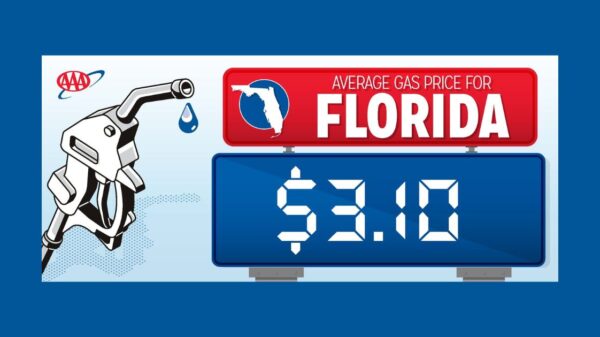
Florida’s working families are paying twice for the same problem. Once at the gas pump, where overseas conflict is pushing fuel prices higher, and again on their power bill, because Florida’s electricity is built on the same imported, globally priced fuel. We can cut that exposure by increasing investments in solar power, by starting a homegrown nuclear power renaissance, and by modernizing the grid.
The answers are obvious. Build more Florida-made power. More Florida solar. More Florida storage. A new generation of Florida nuclear power. A new generation of grid infrastructure.
Critically, new energy must be Florida-made power, not just American-made. Florida is mostly a peninsula, and our grid has limited connections to the rest of the country. Therefore, power that keeps Florida running needs to be generated inside Florida. The more energy we make right here at home, the more predictable our bills will be, the stronger our grid will stand through emergencies, and the less leverage anyone overseas has over a Florida family.
The alternative, natural gas, is expensive. The vast majority of Florida’s natural gas comes from outside of the state. Roughly three out of every four kilowatt-hours generated in Florida come from that same fuel. While natural gas is a critical component of American life, Florida relies excessively on it. When global gas prices rise, Floridians pay more. Florida utilities now project natural gas costs to rise more than 14% over the next decade. Combine that with growing Liquified Natural Gas (LNG) exports, and Floridians could see an extra $15 to $22 a month on their electricity bills by 2035. It doesn’t need to be this way, and the good news is that Florida is well-positioned to make the necessary adjustments.
Florida is already a national leader in solar deployment, thanks in large part to our utilities’ commitment to large-scale adoption as well as the prevalence of rooftop solar in the state. Florida leads the Southeast in total installed solar capacity at just under 20 GW. The fuel-cost savings are evidenced in our power bills. FPL’s solar fleet has saved its customers more than $1 billion in fuel costs since 2021. Duke Energy Florida’s expanding solar program, now totaling more than 1,700 MW across roughly 30 sites, is on track to save its 2 million customers approximately $1 billion across the service life of its newest sites, and Duke passes through roughly $65 million in federal tax credits directly to customer bills every year. Tampa Electric, which by generates the highest share of solar power of any Florida utility, has saved its customers more than $310 million in fuel costs since 2017. Across the state, another 25 GW of solar plus 8 GW of storage are planned for deployment over the next decade. We have already seen what this kind of investment can do. For example, when Hurricane Ian devastated Southwest Florida in 2022, the solar-powered community of Babcock Ranch in Charlotte County recorded zero customer outages.
Solar has proven to be an effective hedge against both price shocks and storm disruption, but it can’t be our only alternative. Florida can and must lead the modern nuclear renaissance. From the very beginning of his second term, President Trump put American nuclear power at the center of his national security agenda by directing our agencies to speed up permitting, advance small nuclear reactor development, and rebuild the U.S. nuclear industry. Our utilities are more than capable of leading the charge on nuclear energy. We have multiple plants that have been in operation for decades, with home-grown experts to service them. Now, we need to reduce barriers to advanced reactor deployment and allow them to transform our grid into one that can provide uninterrupted power through storms, overseas conflicts, and any other form of volatility, while keeping costs low and predictable for households and businesses alike.
Generating more Florida power is only half of the equation. The other half is the wires that carry it. As recent reporting has underscored, even the cheapest new generation gets less affordable when it must ride on aging transmission and distribution lines. The United States has underinvested in grid infrastructure for decades. Florida should pair its build-out of solar, storage, and nuclear with a serious commitment to modernizing the grid, one that delivers stronger transmission, smarter distribution, and the kind of forward-looking planning that keeps up with growing demand. Without those grid investments, every dollar Florida spends on new generation means less affordable, reliable, and clean energy for the families paying the bill.
Florida can’t control the weather or what happens overseas, but we can protect our households and businesses from feeling the pain in their wallets — twice.

Zachary Colletti is the executive director of Conservatives for Clean Energy – Florida.