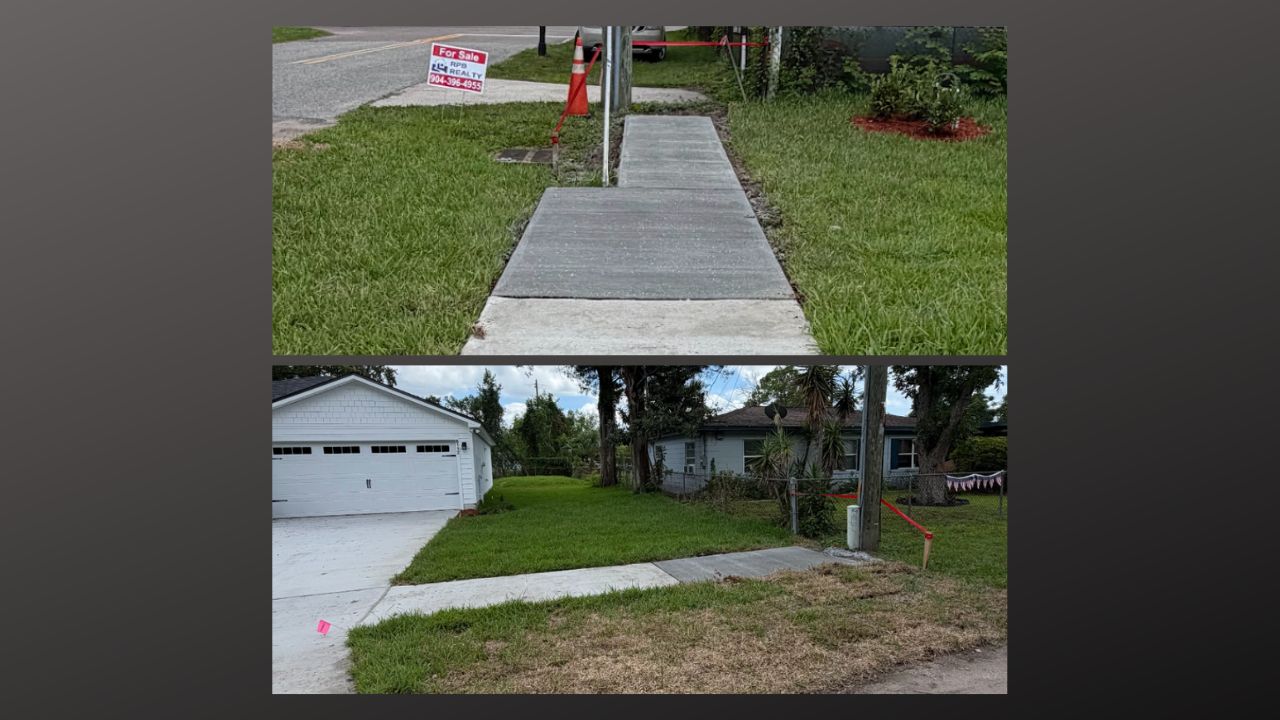
Sidewalks improve safety when they connect people to schools, parks, businesses, and other places they need to go. But requiring isolated stretches of concrete that connect to nothing makes housing more expensive without delivering the connected pedestrian system used to justify the expense.
A pending Jacksonville appeal puts that problem squarely before the City Council. A local home builder seeks to build single-family homes on 19 properties along R on the Northside of the city.
The lots were platted in the 1950s, are in an existing neighborhood (not a new subdivision designed from scratch), and are on streets the City refuses to maintain.


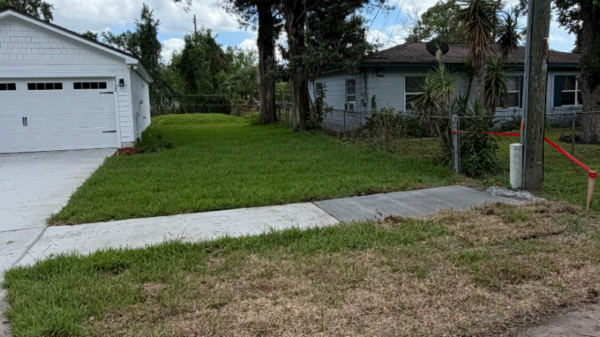
No sidewalks exist in the immediate area for the required segments to connect to.
Looking at the existing layout, there are scattered homes, vacant and wooded land, roadside ditches, and streets without a connecting sidewalk network, and the City has identified no existing route that the proposed segments would complete and no pedestrian destination they would reach.
Even if there were existing sidewalks to connect to the physical condition of the property makes no sense. Open drainage ditches and utility poles occupy the space where sidewalks would ordinarily go. The streets lack the conventional curb-and-gutter improvements that help make sidewalks work as part of a coordinated drainage and transportation system.

On economics, why would a local builder put in new sidewalks if they are expensive and provide no benefit? The answer would seem logical, unless you’re the City of Jacksonville.
Instead, bureaucrats decree installing sidewalks that go nowhere in areas that make no sense. Why? Because they said so. What is their reasoning? There isn’t one. What about the added cost for homes? Not our problem.