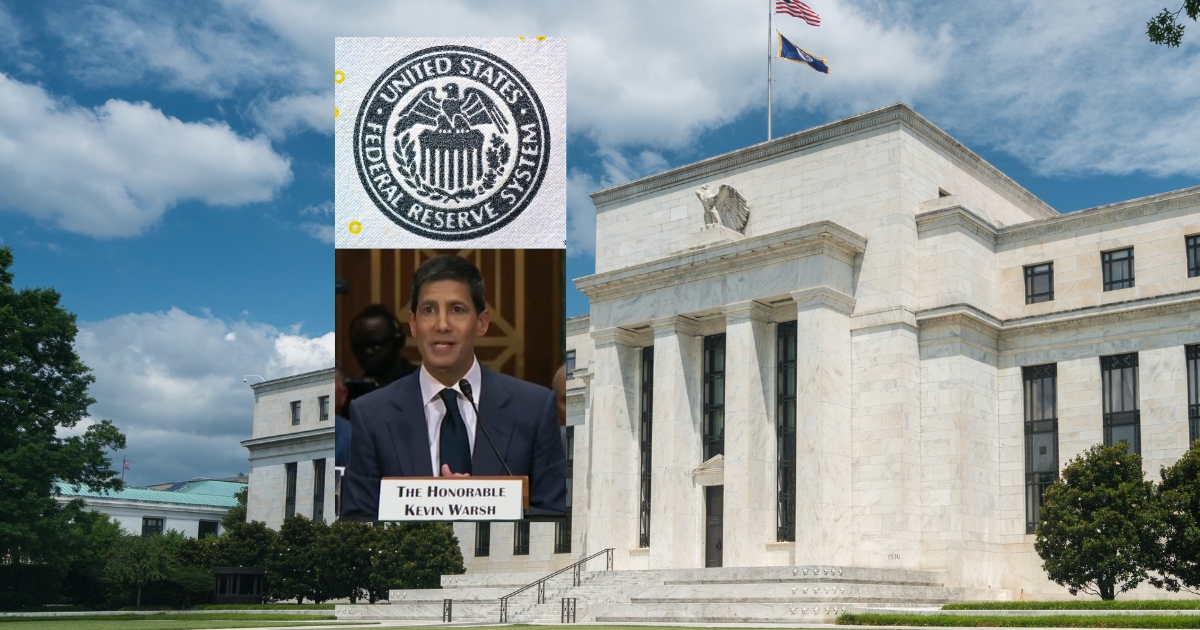
What His Leadership Could Mean for Independent Business in America
With Kevin Warsh now beginning his term as Chairman of the Federal Reserve, America enters a new chapter in economic leadership — one that could have major implications for independent business owners across the country.
For Wall Street, the appointment is important.
For Main Street, it may be transformational.
Most Americans do not follow Federal Reserve politics closely. But independent business owners live with the consequences of Fed policy every single day:
- Interest rates
- Borrowing costs
- Consumer demand
- Credit availability
- Inflation pressure
- Business expansion opportunities
And after several turbulent years of inflation, aggressive rate hikes, regional bank stress, and slowing small-business confidence, Warsh takes over at one of the most economically sensitive moments in modern history.
Who Is Kevin Warsh?
Kevin Warsh is not a traditional academic economist in the mold of past Fed Chairmen. A former Federal Reserve Governor and Wall Street veteran with experience at Morgan Stanley, Warsh has long been viewed as more market-oriented and more skeptical of excessive monetary intervention than many of his predecessors. That matters.
Warsh has historically expressed concerns about:

- Over-expansion of the Federal Reserve’s power
- Long-term inflation risks
- Distortion caused by prolonged easy-money policies
- Excessive dependence on central banking intervention
In simpler terms: He is widely viewed as someone who believes the economy functions best when markets — not constant Fed manipulation — drive growth. hat philosophy could signal a meaningful shift for independent business owners.

What May Change Under Warsh
1. A More Disciplined Federal Reserve

Warsh is expected to favor a more restrained Federal Reserve, particularly regarding stimulus and long-term balance sheet expansion. For years, America operated under ultra-low interest rates and massive liquidity injections. While that environment helped fuel asset growth, it also contributed to:

- Inflationary pressure
- Asset bubbles
- Higher debt dependency
- Distorted valuations
- Increased wealth gaps between Wall Street and Main Street
Warsh appears likely to push toward a more normalized monetary environment. That may create short-term pain — but potentially healthier long-term conditions.
2. Higher-for-Longer Interest Rates May Continue
Independent business owners hoping for an immediate return to near-zero interest rates may be disappointed. Warsh is unlikely to aggressively slash rates unless economic conditions materially deteriorate. Why? Because the Fed’s credibility now matters enormously. After inflation surged in recent years, many policymakers believe the central bank cannot risk appearing soft on inflation again too quickly.
For small business owners, that means:
- Borrowing will likely remain more expensive than during the 2010s
- Banks may continue tighter underwriting standards
- Cash flow discipline becomes critical
- Operational efficiency becomes mandatory
The era of easy debt-fueled growth may be over.
3. Main Street Businesses May Need to Become “Financial Athletes”
One of the hidden consequences of higher rates is that weak businesses become exposed faster.
In a cheap-money economy, inefficiency can survive for years.
In a disciplined-money economy, fundamentals matter again.
That means successful independent businesses will increasingly need:
- Better financial controls
- Clear profitability visibility
- Stronger margins
- Smarter technology integration
- More predictable recurring revenue
This may actually favor disciplined entrepreneurs over heavily leveraged corporate competitors. Why? Because independent businesses often adapt faster.
4. AI and Productivity Will Become Survival Tools
Warsh’s likely emphasis on productivity-driven growth instead of stimulus-driven growth could accelerate America’s push toward automation and AI. Independent businesses are entering a period where technology adoption is no longer optional. Businesses that successfully integrate:
- AI marketing
- Workflow automation
- Customer analytics
- Financial dashboards
- Sales systems
- Digital operations
All of these may dramatically outperform slower competitors. The next decade may belong to businesses that combine human relationships with machine-level efficiency.
Florida’s Position Looks Strong
For Florida independent businesses, the outlook may remain comparatively favorable. Florida continues benefiting from:
- Population migration
- Entrepreneurial growth
- Tourism strength
- Logistics expansion
- Lower-tax advantages
- A generally pro-business environment
Even in a tighter monetary environment, Florida may remain one of the most resilient states for small-business formation and expansion. That does not eliminate risk. But relative to many regions, Florida still offers opportunities.