As Florida prepares for a special legislative session in the coming weeks, families like mine are watching with deep concern. Lawmakers are now being asked to revisit proposals that would expand nonmedical exemptions from school vaccine requirements. For families like ours, this debate is not abstract or political. It is deeply personal and potentially life‑threatening.
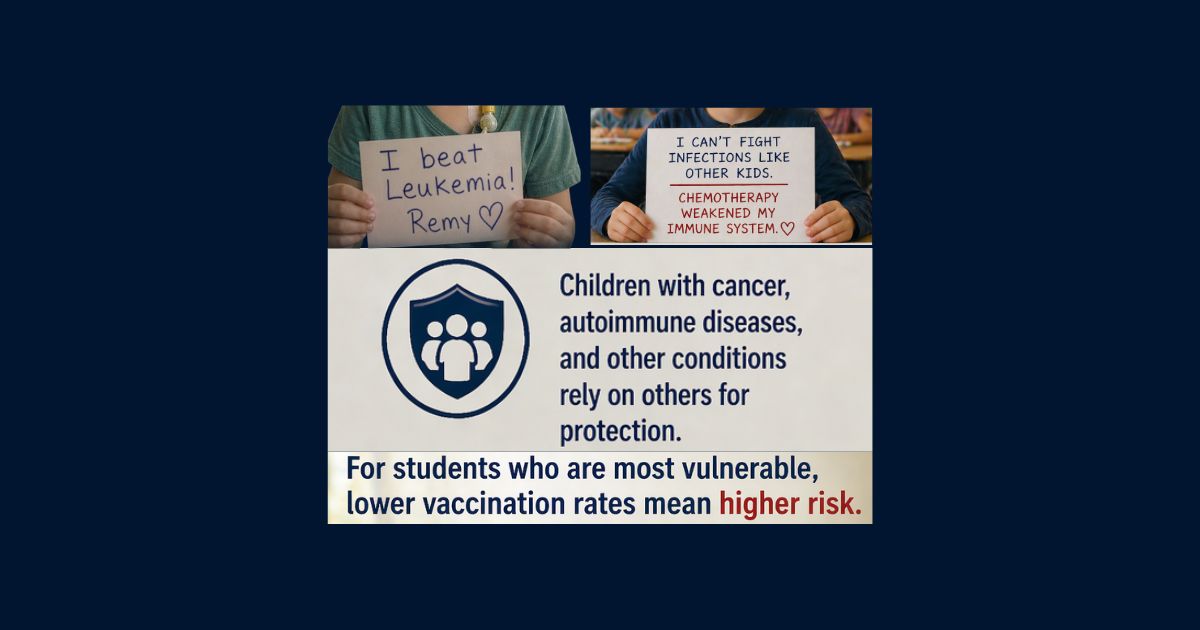
My young son, Remy, is a leukemia survivor. Diagnosed when he was 2 years old, chemotherapy weakened his immune system, which means routine infections can become serious very quickly. Community immunity is not simply a public health concept to our family. It is the protection that allows our child to attend school, be around other people, and experience some measure of normal childhood.
During the most intense phase of Remy’s treatment, that reality became unavoidable. We lived in near isolation. We limited contact with others, relied on grocery delivery, disinfected packages and gifts, and avoided gatherings with friends and extended family. Infection would not have been a minor setback. It could have been devastating. When your child is immunocompromised, every outing becomes a risk calculation, and every layer of protection matters.
That is why school and childcare vaccine requirements are so important to families like ours. They create a dependable baseline of protection in the settings where children spend the most time together. During chemotherapy, I relied on other parents, and complete strangers to do their part to help protect my son. Knowing that certain spaces maintain higher vaccination standards does not guarantee safety, but it significantly improves the odds against dangerous infection.

This conversation often turns to parental choice, and as a parent myself, I understand why. As parents, we should be empowered to ask questions and make thoughtful, informed decisions for our children. I respect that families approach health decisions carefully and with love. At the same time, the safety of shared environments depends on more than individual intent. Children with weakened immune systems rely on the collective protections of their classrooms and communities to stay well.
My wife is a teacher, which adds another layer of concern. She interacts with students every day, and any increased exposure at school has the potential to follow her home. Policies framed as protecting freedom for some families can reduce safety and freedom for others. True freedom should not come at the expense of another child’s health.

Florida already has a medical exemption process for children who truly cannot be vaccinated. Expanding nonmedical exemptions weakens the very protections those medically vulnerable children rely on. When safeguards loosen, the children with the least margin for risk feel the consequences first.
This perspective is not unique to families like mine. Floridians also understand this with recent polling showing that eight in ten voters, across all parties, regions, and backgrounds, support keeping our current school vaccine safeguards in place. Parents want their children protected, and they want stability in classrooms, workplaces, and communities. And we’ve felt that firsthand in our own community. So many people rallied around Remy during treatment and continue to rally around us today to help us give him as normal a life as possible. That support only strengthened my belief that protecting one another is a shared responsibility.
As measles spreads in Florida communities, this is not the moment to pull back the protections that have kept our schools and childcare centers safe for decades. The risks are no longer hypothetical. As lawmakers prepare for a special session, Florida must hold the line on vaccine safeguards for the children who rely on their community the most to stay healthy.

Tim Heberlein is a Tampa-based father of a son who survived leukemia.