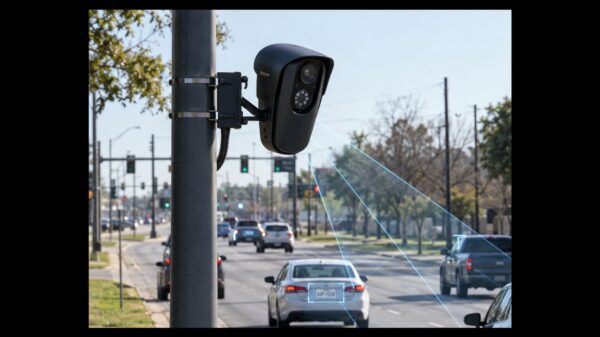
Governor Ron DeSantis and the Florida Department of Transportation (FDOT) announced an order to remove Flock Cameras on Florida Highways. Watch Florida Daily show hosts Ed Dean & Lindsey Randall react to the news. They’re joined by New South Politics editor Matt O’Hern, who has researched Flock camera disputes across the Southeast US.
Florida’s growing debate over automated license plate readers is raising a broader question for state and local officials: Can law enforcement keep the crime-fighting benefits of Flock cameras while putting stronger protections in place for residents’ privacy?
During a recent episode of The Florida Daily Show, Ed Dean, Matt O’Hern and Lindsay Randall debated whether Florida should restrict, regulate or eliminate the use of Flock Safety cameras as criticism of the technology continues to grow.
Dean said he supports the cameras when they are used for legitimate law enforcement purposes, including locating missing children, assisting with Amber Alerts and identifying wanted suspects. But he argued that Florida needs clearer laws limiting how agencies can use the information collected.
“We need the Flock cameras,” Dean said. “Having said that, what we need to do is we need to start passing some bills.”
He suggested state law could specifically define when the technology may be used, how long information can be retained and what uses should be prohibited.

Flock Safety CEO Garrett Langley has pushed back against criticism of the company, arguing that misinformation has fueled much of the backlash.
Langley said Flock does not sell customer data or use facial recognition technology. He said the system reads license plates as vehicles pass cameras and that information not connected to a criminal investigation is deleted after seven days.
“Our customers own it,” Langley said of the data.

But the panel questioned whether assurances from the company are enough to satisfy a public that has become increasingly skeptical of government agencies, technology companies and private contractors.
O’Hern said he sees legitimate arguments on both sides.
“If my son were kidnapped, I sure would want to have as many tools as possible to find him,” O’Hern said.

At the same time, he said there is a “built-in mistrust” among voters when government surveillance involves a third-party company.
O’Hern said one potential compromise could be limiting use of the technology to emergencies such as Amber Alerts and Silver Alerts.
The larger concern, he said, is whether the public can be certain those restrictions are actually being followed.

“How do we really know that that’s the only time they’re going to be activated?” O’Hern asked. “It’s uncharted territory in a lot of ways.”
That concern was echoed by Randall, who argued that Americans have experienced an enormous increase in surveillance over the past several decades.
“The amount of surveillance that we’ve gotten from then to now is astronomical,” Randall said.
She questioned whether adding more cameras is necessary and warned that expanding their use could create a slippery slope.
Polk County Sheriff Grady Judd has strongly defended automated license plate readers, saying they can help officers locate dangerous suspects, missing children and people with Alzheimer’s disease.
Judd argued that cameras positioned along public roadways are looking primarily at license plates and vehicle descriptions rather than intruding into homes or other traditionally private spaces.
“We’re going to find lost children, lost Alzheimer’s patients, warrant suspects, and we’re never going to invade your privacy to do it,” Judd said.
The panel said one of the biggest distinctions may be where cameras are located and how the resulting information is used.
Dean said he is more comfortable with cameras on public roadways than proposals to install similar technology on garbage trucks or use mobile cameras to collect information about private property.
The panel referenced concerns raised by Jacksonville City Councilman Rory Diamond about the possibility of cameras being mounted on garbage trucks.
Dean argued that such a use would go far beyond the public-safety justification commonly offered for license plate readers.
He compared the idea to local property appraisers using aerial imagery to identify additions such as swimming pools that could affect property assessments.
Randall said expanding surveillance technology into residential neighborhoods could deepen public distrust.
She also questioned whether residents should simply take a private company’s word that information is being deleted as promised.
“There are no guardrails basically right now,” Randall said. “Prove it.”
She said the financial interests of companies selling surveillance systems make independent oversight even more important.
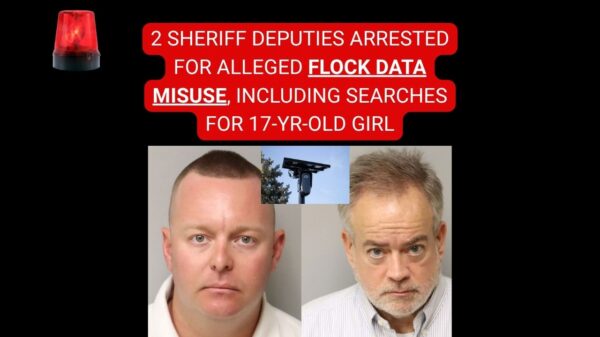
Dean argued that misuse by individual officers should not necessarily justify eliminating the technology altogether.
Instead, he said agencies and employees who improperly access information should face strong consequences, potentially including termination, lawsuits or prosecution.
He compared the issue to financial institutions handling private customer information. Banks are allowed to possess sensitive information, he noted, but are subject to significant legal restrictions governing how that information may be used.
“Exactly,” Dean said. “That’s why we need to set laws on this and regulate the Flock cameras.”
The panel broadly agreed that stronger auditing and transparency requirements could help address some of the concerns.
Dean suggested law enforcement agencies using license plate readers should face regular audits and penalties if information is retained longer than promised or accessed for unauthorized reasons.
“We’ve got to put some regulations on this for the protection of people,” he said.
O’Hern also pointed to police body cameras as an example of surveillance technology that can provide benefits when paired with transparency and accountability.
He said he strongly supports police body cameras because recorded footage can provide direct evidence of what happened during encounters rather than forcing the public to rely entirely on competing accounts.
“Transparency,” O’Hern said. “I think that’s if there ever were a bipartisan — yes.”
The Flock debate is likely to remain part of a larger Florida conversation over how emerging technology should be regulated.
Dean compared the controversy to the debate surrounding AI data centers, arguing that companies seeking approval for controversial technologies should be willing to publicly answer questions from residents rather than relying solely on assurances from executives or government officials.
The panel’s consensus was not that every surveillance tool should be prohibited, but that governments need clear rules spelling out where the technology can be used, why information may be accessed, how long it can be stored and what happens when those rules are broken.
As automated license plate readers become more common, those safeguards could ultimately determine whether Floridians view the technology as a valuable public-safety tool or another expansion of government surveillance.