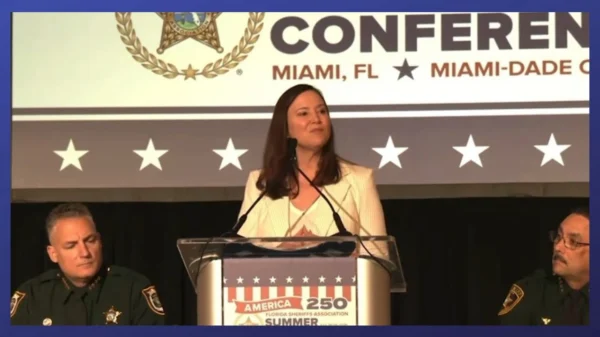
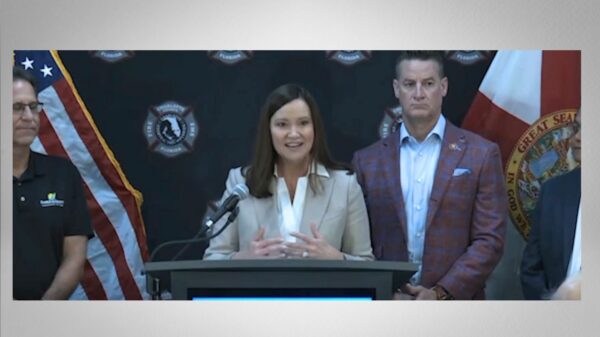
Florida’s Junior U.S. senator, US Senator Ashley Moody, introduced a federal bill known as the Halo Act that would make it illegal for individuals to knowingly come within 25 feet of federal law enforcement officers performing their duties after being told to stay back. The measure specifically targets situations in which a person entering that zone intends to interfere with the officer’s work, threaten the officer, or harass the officer while the officer is on duty. If passed, the legislation would impose criminal penalties, including fines and up to five years in prison, for those who violate the buffer zone after a warning.
Moody has framed the proposal as a necessary response to what she and supporters describe as a surge in threats and violent confrontations against federal officers — particularly immigration enforcement agents — during enforcement operations. She notes that the bill is modeled on a similar “Halo Law” passed in Florida, which creates a buffer around first responders and prohibits people from approaching too closely once warned.

According to Moody, the federal version is intended to ensure that officers can carry out their duties without fear of harassment or obstruction by bystanders or protestors.
The bill has garnered attention in Washington amid broader debates over law enforcement protections and public safety, though its reception is mixed. Supporters argue it would help protect officers from dangerous situations and ensure public safety during enforcement activities. Critics raise concerns about potential implications for civil liberties and how the law might be applied in practice, especially in contexts involving protests and First Amendment activity. As of now, the Halo Act’s progress through the Senate is ongoing, and it awaits wider support and potential amendments before becoming law.