You don’t notice it straight away. The game looks normal. The odds look normal. Everything feels like it’s happening at the same time. But sit with it for a bit, especially during a fast match, and something starts to feel slightly out of step. A shot happens. You see it clearly. Maybe even react to it. Then you glance at the odds and realize they already moved. Not after. Before. It’s a small thing. Easy to ignore. But it keeps happening. And once you catch it once or twice, it’s hard to unsee.
It’s Not One Feed, It’s Two Different Worlds
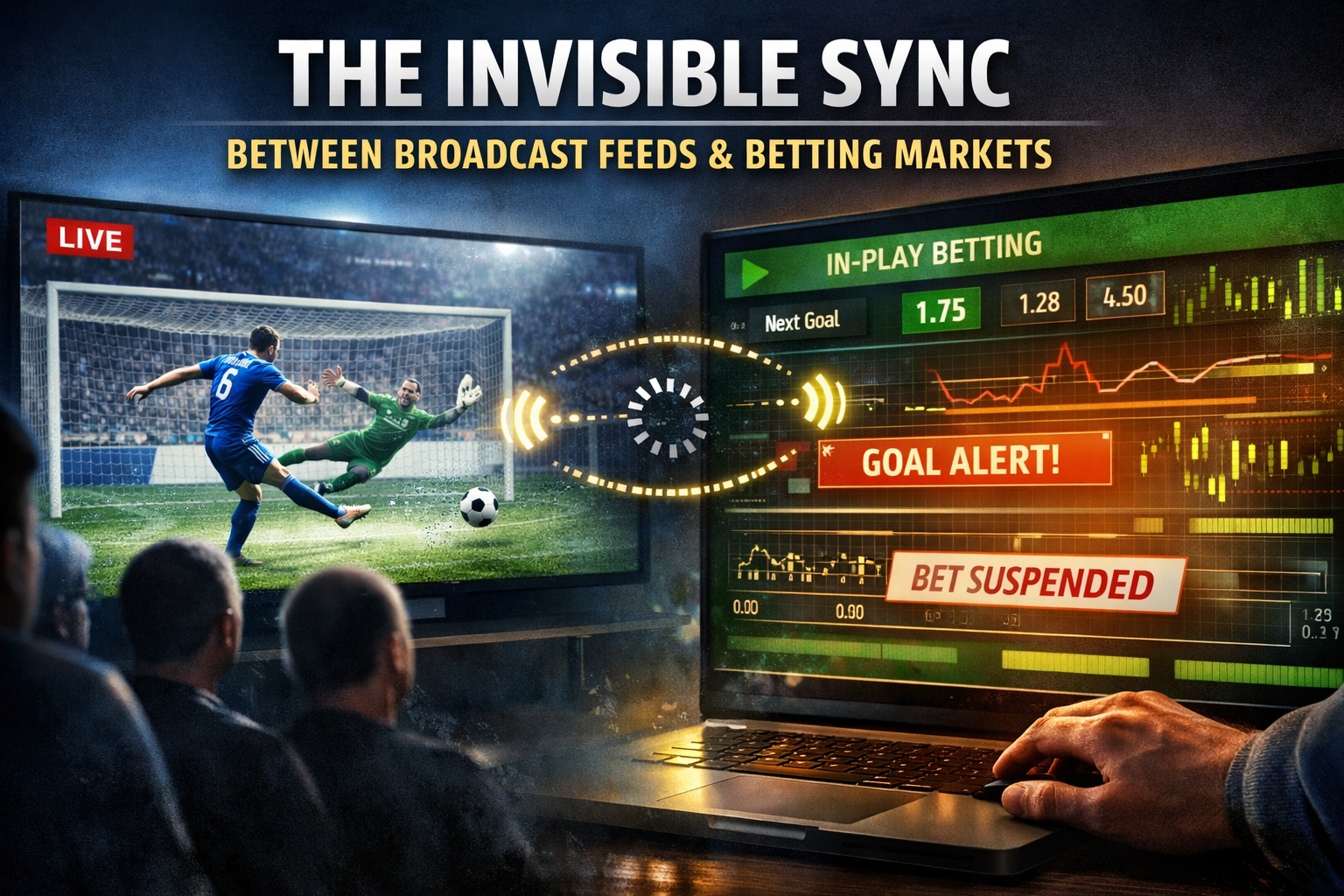
What you’re watching and what the market is reacting to aren’t actually the same stream. The broadcast is built for viewing. Cameras, production, replays, commentary layered on top. It goes through encoding, transmission, all of that, before it reaches your screen. Even on a good connection, there’s always a bit of delay sitting there. At the same time, there’s a separate flow of information moving in the background. Not video. Just raw events. A shot registered. A foul called. Possession turning over. That’s the layer where most bet activity actually connects. Not to the pictures you’re watching, but to the signals being processed in real time behind them. That data doesn’t need to look good. It just needs to arrive fast. So it takes a shorter path. That’s where the gap starts.

Why the Market Feels Like It’s One Step Ahead

When a chance builds, the system doesn’t wait for you to see it play out. It reacts to signals. Pressure building, entries into the box, sequences that statistically lead somewhere. Sometimes even before the final action happens. So by the time the shot actually appears on your screen, the adjustment is already in motion. Not always dramatic. Sometimes it’s just a slight shift. But enough to feel like you missed the moment by a second. Platforms like betway work inside that flow. They’re not reacting to what you’re watching. They’re reacting to what’s already been registered. That difference matters more in fast games than slow ones.
The Delay Isn’t the Same for Everyone

This part gets overlooked. Two people watching the same match aren’t always seeing the same second of the game. One might be a couple of seconds behind. Another maybe a bit closer to real time. Depends on the stream, the device, the connection. So when you’re looking at odds, you’re not always aligned with the version of the match the market is using. That’s why sometimes it feels like things move “too quickly.” They’re not. You’re just slightly late to it without realizing.
Those Sudden Market Pauses
Right before something big, everything freezes. Odds disappear. Markets suspend. Then they come back a few seconds later, adjusted. It can feel abrupt if you’re in the middle of it. But it’s not random. It’s more like the system taking a breath. When a key moment hits, goal chance, penalty situation, something unclear, the safest move is to stop everything briefly. Let the data settle, confirm what actually happened, then reopen. It keeps things from drifting too far out of sync. Without that pause, the gap would show a lot more.

It Feels Smooth, But It Isn’t Perfect
From the outside, it all blends together. You watch. You react. The numbers move. It feels connected. And most of the time, it is close enough. But underneath, it’s two timelines running side by side. One visual, one data-driven. They overlap most of the time, but not completely. That tiny difference is where a lot of those “almost” moments come from. The bet you thought you had time for. The odds that shifted just before you clicked. The chance that looked better on screen than it already was in the market. Nothing dramatic. Just slightly out of step. And that’s really the whole thing. Not broken. Not unfair. Just not perfectly in sync.