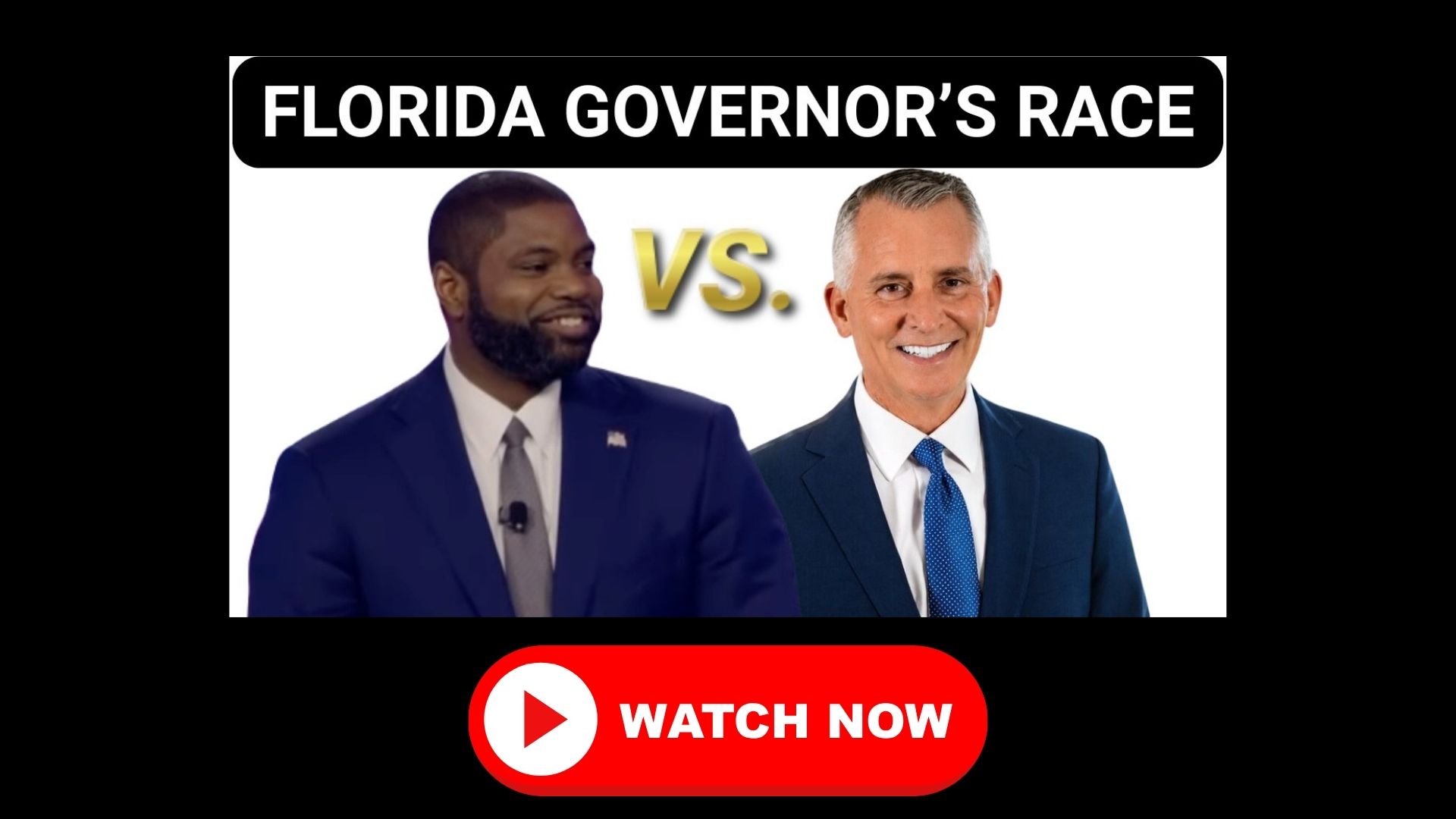
Florida Daily’s political roundtable examines Byron Donalds’ apparent effort to distance himself from President Donald Trump, David Jolly’s refusal to debate, and whether dissatisfied Republican voters could influence Florida’s gubernatorial election.
Byron Donalds Removes Trump References From Campaign Website
Ed: Byron Donalds recently removed references to President Donald Trump from his campaign website. Was it just Trump’s endorsement, or did he remove other material as well?
Kaitlin: From what I’ve seen, anything related to Trump appears to have been removed.
It’s interesting because I believe an Alaska senator did something similar during a reelection campaign.
I think it shows that some Republican candidates feel the need to establish some separation from Trump.
Donalds has been portrayed as Trump’s political extension in Florida. People have even suggested he would essentially represent the White House in the governor’s office.
Removing those references could be his way of signaling that he intends to be his own person, whether that’s actually true or not.
From a campaign strategy perspective, I think it’s significant.
Ed: But everybody knows Trump endorsed Byron Donalds, right?
Kaitlin, do you think it’s smart to remove the endorsement? Could it help Donalds appeal to voters who aren’t necessarily Trump supporters?
Kaitlin: I think it could.
There are independents and conservative voters who aren’t part of the MAGA movement who might appreciate seeing Donalds establish some distance from the president.
He’s already won the Republican primary. He doesn’t need Trump’s endorsement to defeat other Republican candidates anymore.
Now he needs to appeal to a broader electorate.
He needs to come across as a conservative, likable candidate who is capable of thinking and acting independently of Trump.
Ed: Matt, what do you think? Do you agree?
Will Voters Notice the Change?
Matt: No.
You know what this reminds me of? Those warnings on Superman Halloween costumes that say, “Warning: Cape does not enable the wearer to fly.”
I love the idea that there’s some voter out there researching Byron Donalds, visiting only his campaign website and concluding, “Oh, this guy has nothing to do with Donald Trump!”
I just don’t think that’s how voters behave.
Ed: I agree with Matt on that point.
I remember a Republican friend of mine who was running for judge in a nonpartisan election.
She told me she was only sending campaign mail to Republicans and independent voters.
I asked why she wasn’t contacting Democrats, since the election was nonpartisan.
She was convinced voters would look up her party registration and realize she was a Republican.
I told her she was going to lose.
And she did.
Most voters aren’t spending their time researching a candidate’s party registration or analyzing every detail of a campaign website.
Caitlyn, I understand your argument that Donalds is trying to signal independence from Trump. I’m just not convinced many voters will respond to that.
Kaitlin: I think the message is that he’s trying to separate himself from Trump somewhat.
Ed: But he couldn’t do that during the primary.
And at this point, removing Trump from his website might create an opening for people like JD Vance without really changing how voters perceive Donalds.
Matt: David Jolly could easily turn it into an attack.
He could say, “The man who made you politically famous is the same man you’re now trying to distance yourself from. Why did you remove him from your website?”
That’s an obvious campaign argument.
David Jolly and Byron Donalds Disagree Over Debates
Ed: The problem is that Jolly should be making that argument on a debate stage.
But apparently, that’s not going to happen.
Matt: I don’t think debates matter nearly as much as people believe they do.
In 2026, debates aren’t the major deciding factor they once were.
One figure I’ve seen suggests that only about 17% of voters say debates affect their existing opinions.
How many voters are genuinely undecided about Donald Trump or what he represents at this point?
Ed: I understand your argument, especially when it comes to politically engaged voters.
People who read Florida Daily, watch our program or listen to my radio show are already following these issues.
But the average voter doesn’t necessarily follow politics closely.
Debates can still change perceptions.
Look at Joe Biden’s disastrous presidential debate performance in 2024. That had enormous political consequences.
I agree that someone researching Byron Donalds’ campaign website probably already knows his relationship with Trump.
But I’m talking about the voters who aren’t closely following the race.
Matt: Donalds also declined to debate his Republican primary opponents.
That’s another point Jolly could raise.
Ed: And Jolly previously suggested he would debate Donalds numerous times.
But then he went on Reverend Al Sharpton’s television program and explained why he wasn’t going to participate.
Sharpton asked why the two campaigns couldn’t agree on debates when both sides had accepted different invitations.
Jolly responded that he was no longer confident a debate would happen.
Let’s take a look at what he said.
David Jolly Explains His Decision
David Jolly (recorded interview): “Today I said that I won’t debate Byron Donalds in the general election. I think he’s acting with bad faith and continues to peddle lies. And Rev, you can’t debate a liar. I learned that early in politics.”
Jolly continued by arguing that debates could contribute to the toxicity and division already present in politics.
He said he wanted to bring Floridians together and believed the current political environment would make debates harmful rather than constructive.
Ed: I understand his argument, but I don’t agree with the decision.
I think debates during the Republican primary could have hurt Byron Donalds.
I’m not saying they necessarily would have cost him the nomination, but they could have damaged his standing.
Caitlyn, I’ve talked with political pollsters who say candidates usually avoid debates when they believe they’re comfortably ahead or see little potential benefit.
I don’t know whether that applies to Jolly.
But if I’m David Jolly, I want Byron Donalds on that debate stage.
There are still plenty of voters who aren’t paying close attention to the race.
A debate gives Jolly another chance to introduce himself and challenge Donalds directly.
Kaitlin: I agree.
If I’m advising Jolly, I want every opportunity for media exposure and screen time.
He’s already accusing Donalds of dishonesty.
Why wouldn’t he want the opportunity to challenge Donalds face-to-face?
Regardless of whether the debate ultimately changes the election outcome, I think it’s an important opportunity for civil discourse.
I completely disagree with the argument that debates would necessarily damage public discourse.
We need more opportunities for candidates to discuss issues openly.
What better example of that than two people running for governor appearing on the same stage?
Is Jolly Making a Strategic Mistake?
Ed: Matt, set aside the polling numbers for a moment.
Why do you think David Jolly doesn’t want to debate?
Matt: I genuinely don’t know.
It’s puzzling.
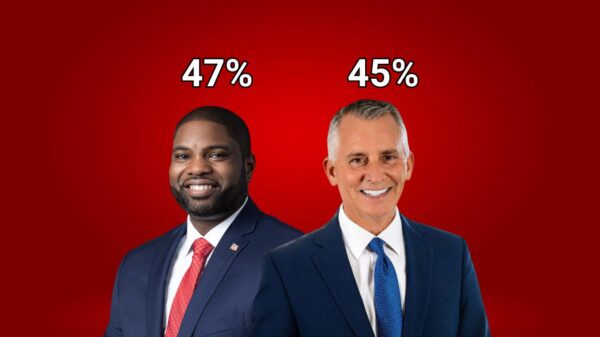
If I put myself in the position of one of Jolly’s campaign advisers, I would assume that, in a best-case scenario, we’re within single digits of Donalds.
What could realistically happen in a debate that would significantly damage Jolly’s standing?
I don’t think Donalds could successfully portray Jolly as another Angie Nixon.
Jolly could simply point to his congressional voting record.
I know this may upset some Trump supporters, but Jolly’s congressional record wasn’t particularly extreme. He was a moderate Republican.
He would probably have to say something especially outrageous during a debate for it to seriously damage his campaign.
So I don’t understand the decision.
One possibility is that his campaign believes tightly targeted advertising and messaging are more effective than participating in debates.
Another possibility is that Jolly has access to internal polling showing him in a stronger position than public surveys suggest.
I’ve also been doing some polling of my own using methods I’ve developed.
If those numbers are accurate, Donalds is performing roughly 20 percentage points worse among women than Ron DeSantis did in 2022.
If that’s true, it could dramatically change the race.
Ed: I don’t know exactly what polling you’re conducting, but I would agree that Donalds doesn’t appear to have the same level of support DeSantis enjoyed.
I think a debate could have helped Jolly and potentially hurt Donalds.
Frankly, Donalds may be relieved that he doesn’t have to participate.
Kaitlin: If I were running Jolly’s campaign, I’d want the debate.
He’s a moderate, he’s articulate, and he knows how to deliver effective sound bites.
Even if the debate became boring after 15 or 20 minutes, the opportunity would still be valuable.
Ed: Exactly.
If I’m Byron Donalds, I try to portray Jolly as aligned with the Democratic Socialists of America, whether that characterization is fair or not.
That’s the obvious Republican strategy.
But if I’m Jolly, I focus on the issues affecting everyday Floridians.
I’d say Republicans have controlled Florida’s government for years.
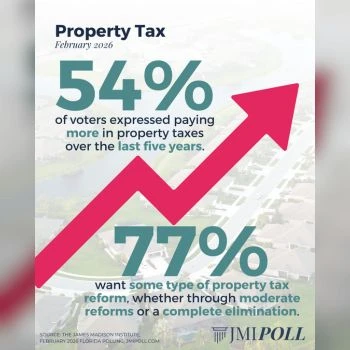
Then I’d bring up property taxes, property insurance and the controversy surrounding artificial intelligence data centers.
Those are issues voters understand.
Jolly could simply ask whether Floridians are satisfied with the way things are going.
If voters like the current situation, they can support a continuation of Republican leadership.
But if they’re frustrated with affordability, they might be willing to consider a change.
Matt: And that’s a potentially effective argument.
I’ve said before that I consider Ron DeSantis one of Florida’s greatest governors.
There are economic factors outside his control that have contributed to rising costs, and I think he’s tried to address some of them.
But that doesn’t mean every Republican candidate automatically inherits his support.
Donalds has to make his own case to voters.
I also think the data center issue is an area where Jolly could have challenged him effectively.
Are Conservative Republicans Planning to Skip the Governor’s Race?
Ed: Caitlyn, let’s talk about what we’re seeing on social media.
We’re all active on Facebook and other platforms.
Matt follows polling numbers closely. Caitlyn, you also see plenty of political discussions through your social media pages and Substack.
During the 2024 presidential election, there were Republicans who initially said they wouldn’t vote for Trump.
But as Election Day approached, some of those voters came back into the fold because they didn’t want Joe Biden or Kamala Harris to win.
I’m not seeing the same thing happen with Byron Donalds.
After the Republican primary, we saw a lot of conservatives saying they weren’t going to vote for him.
Usually, that kind of opposition starts to fade as the general election approaches.
But this time, I’m still seeing Republicans say they won’t vote for Donalds.
They’re not necessarily supporting Jolly, either.
They’re talking about skipping the governor’s race entirely.
Caitlyn, are you still seeing that?
Kaitlin: Unfortunately, yes.
I’m seeing a lot of conservatives and Republicans saying they simply aren’t going to vote in the governor’s race.
Many feel they’re being forced to choose between David Jolly and someone they view as an extension of the Trump White House.
They’re unhappy with the current direction of the federal government, and they don’t want that approach carried over into Florida.
I know conservatives who are seriously considering sitting this election out.
Personally, I can’t support that decision.
I believe every American citizen should exercise the right to vote in every election.
But I do think some Republican voters are going to skip this race.
Ed: Matt, choosing not to vote is also an individual’s right, isn’t it?
Matt: Absolutely.
Just as free speech includes the right not to speak, voters have the right not to participate in a particular election or race.
But Caitlyn raises an important point about what Republican dissatisfaction could mean for the election outcome.
Why Florida’s Republican Registration Advantage May Not Guarantee Victory
Matt: People keep pointing to the Republican Party’s substantial voter registration advantage in Florida.
They say Republicans have roughly a million more registered voters than Democrats, so the gubernatorial election shouldn’t be competitive.
But voter registration is a lagging indicator.
Democrats don’t necessarily need a massive increase in turnout to win.
They may only need a modest decline in Republican participation combined with a strong showing among independent voters.
That’s the formula that could allow a Democrat to win statewide.
We’ve already seen examples in local elections where some Republican voters supported Libertarian or Democratic candidates instead.
These kinds of political shifts happen.
Ed: That’s true.
And Republicans shouldn’t assume they’re immune to the same forces that have helped them in previous elections.
Trump attracted some voters who previously supported Democrats.
Barack Obama also won support from voters who didn’t traditionally identify with his party.
Political coalitions can change.
But Matt, here’s what I want to know.
Is the opposition to Donalds among DeSantis-aligned Republicans still as strong as it was during the primary?
Matt: From what I’m seeing, yes.
I don’t think Donalds has successfully won over the Republicans who were more supportive of DeSantis than Trump.
That includes Never Trump Republicans, traditional Reagan-Bush conservatives and other Republicans uncomfortable with Trump’s influence over the party.
Then consider younger female voters, particularly in college communities.
Some of those voters may turn out to support Angie Nixon in the U.S. Senate race.
And if they’re voting for Nixon, they’re probably not going to support Byron Donalds for governor.
Many will likely vote for David Jolly while they’re at the polls.
That could create a significant advantage for Democrats.
Could Independent Voters Decide Florida’s Election?
Ed: We’ll see how the numbers develop.
I agree that independent voters are extremely important.
If they’re breaking heavily toward Democrats, that could change the outcome.
Some of their support might be more of a protest vote than genuine enthusiasm for Jolly.
They may simply be frustrated with Republicans.
Other voters might support Ashley Moody for Senate but skip the governor’s race.
Matt makes a strong point about registration numbers.
Republicans could have a million or even two million more registered voters, but that advantage doesn’t mean anything if those voters don’t actually show up.
Kaitlin: Exactly.
The Democrats seem much more organized right now.
It was impressive that Republicans were able to establish such a substantial voter registration lead in Florida.
But what have they done with that advantage?
Democrats continue organizing, registering voters and building their ground game.
Republicans can’t assume their registration advantage will automatically translate into victories.
If they’re complacent while Democrats are organizing, that advantage could become meaningless.
Ed: That’s something we’ll continue examining as Election Day approaches.
Early voting will begin soon, and mail ballots are already becoming an important part of the election process.
The governor’s race is raising some fascinating questions about the future of Florida politics.
Can Byron Donalds unite Republicans who remain divided over Donald Trump?
Can David Jolly appeal to independent voters and dissatisfied conservatives?
And will Republican voter registration advantages translate into actual turnout?
Those are the questions that could determine the outcome.
We’ll continue following these developments in the weeks ahead.
For more coverage of Florida politics, elections and public policy, visit FloridaDaily.com and subscribe to the Florida Daily YouTube channel.