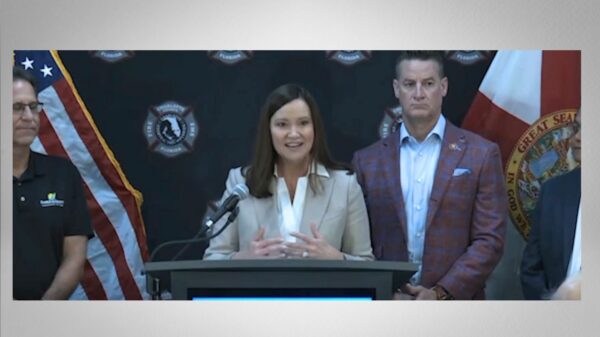
On Monday, Florida Attorney General Ashley Moody issued a Consumer Alert to warn Floridians about games designed to hack password-protected accounts.
With millions of people now working from home or unemployed due to the COVID-19 pandemic, social media games are becoming more prevalent. Many of these games require users to create posts with seemingly innocuous personal information, such as the name of your first pet, high school mascot or favorite food. Some of these same questions are used by banks and financial institutions as security questions to grant online access to password-protected accounts.

“Playing online games with friends is a good way to stay connected while we obey the stay-at-home order to stop the spread of COVID-19. But games that ask you to answer personal questions, could be used by scammers trying to hack your password protected accounts. Be smart about what you share on the internet and make sure all of your personal and financial accounts have strong passwords and hyper-specific answers to security questions,” Moody said on Monday.
One game to be mindful of—highlighted by the Better Business Bureau—asks users to post their senior picture in support of the 2020 graduates who will not be able to attend high school graduation as we social distance to stop the spread of the coronavirus. The game seems innocent enough but posting a picture with the name of a high school and year of graduation gives hackers a lot of personal data to work with. Moody’s team warned Floridians to be very selective about information they provide via public posts.
Here are some more tips for protecting sensitive information online:
- Consider who can view a post. Most social media platforms allow users to limit who can access a user’s posts;
- Be wary of any social media games that require the user to click a link. The link could contain malware;
- Avoid games that require users to enter personal information before playing;
- Make sure all passwords include numbers, characters and punctuation and are otherwise impossible to guess. Avoid passwords that are names of pets, mascots, anniversary dates or are otherwise based on personal information; and
- Create complex answers to security questions to keep hackers from guessing the answers.
These are just a few tips to help better protect Floridians as we all social distance to stop the spread of COVID-19.