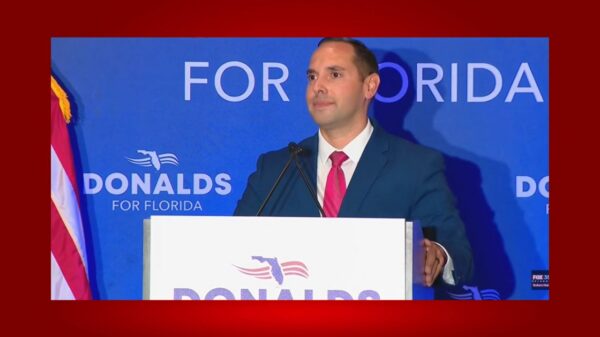
Florida Congressman Byron Donalds‘ campaign for Florida governor reported a significant fundraising boost this week, raising over $9.2 million during the third quarter of 2025. This latest influx brings his overall campaign total to more than $31.5 million, solidifying his financial lead in the crowded race to succeed Governor Ron DeSantis.
Campaign finance reports indicate that approximately $7.9 million of Donalds’ Q3 total came through his political committee, while the remainder went to his campaign account. This figure is particularly notable during what is typically a slow summer fundraising period and highlights the strength of his donor network.
Donalds, who entered the race in May, has rapidly gained momentum with both grassroots activists and establishment Republicans. He has secured the endorsement of former President Donald Trump—a crucial endorsement in a GOP primary—and has recently received support from 15 county sheriff’s offices across Florida. His campaign is also supported by top members of House Republican leadership, including Speaker Mike Johnson, Majority Leader Steve Scalise, Majority Whip Tom Emmer, Conference Chair Lisa McClain, and Leadership Chair Elise Stefanik.

“By every metric, Byron Donalds is the dominant force in the governor’s race,” said Ryan Smith, chief strategist for the Donalds campaign. “With his broad conservative grassroots support, record-setting fundraising, and a substantial lead in the polls, Byron Donalds is traveling throughout Florida to deliver his winning message to every corner of the state.”
Recent polling has shown Donalds enjoying significant advantages over both declared and potential Republican challengers. Former Florida House Speaker Paul Renner is currently the only announced rival, while speculation continues regarding other possible contenders. Furthermore, Donalds leads likely Democratic opponents in early surveys.
With more than $31 million raised just over a year before the election, Donalds is well-positioned to saturate Florida’s costly television markets and invest in a ground operation to engage the state’s large and diverse electorate. Political observers note that his campaign’s financial strength allows him to shape the race early and forces his opponents to play catch-up.

The challenge ahead will be converting this fundraising advantage into a sustained organization capable of translating financial resources into votes. Florida’s size, media expenses, and political competitiveness require both substantial spending and grassroots mobilization. For now, Donalds heads into the fall as the clear financial frontrunner in the GOP primary, with momentum that shows little sign of slowing.