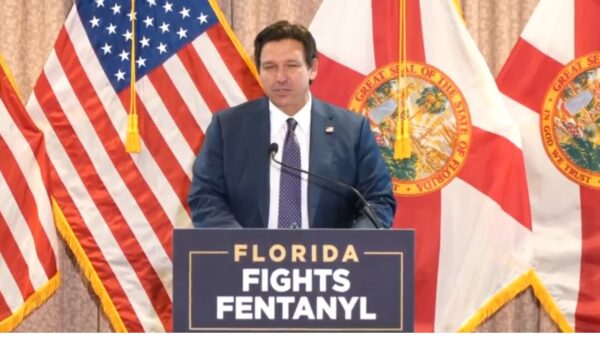
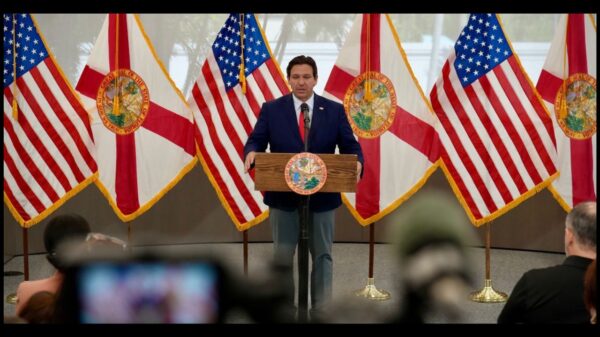
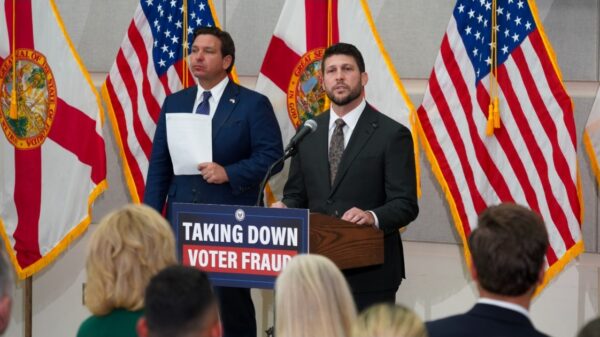
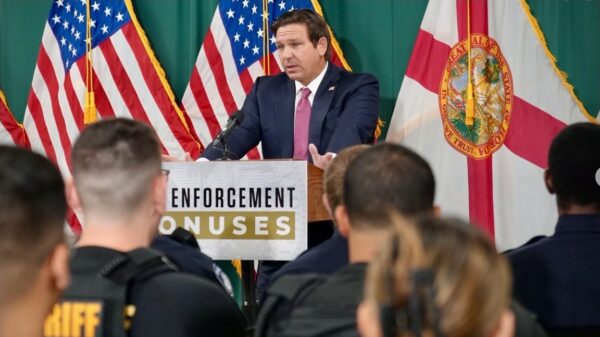
Florida Governor Ron DeSantis unveiled a legislative proposal that would require federal candidates to disclose whether they intend to trade stocks if elected—an effort he says is aimed at increasing transparency around congressional stock activity and restoring public trust.
The announcement coincided with DeSantis’ endorsement of a federal bill filed by U.S. Rep. Anna Paulina Luna (R-Fla.), which seeks to ban members of Congress from trading individual stocks while in office. DeSantis urged Florida’s congressional delegation to support Luna’s proposal, arguing that lawmakers’ investment activity has become a source of public distrust.
“We are sick of seeing members of Congress with no prior investment acumen all of a sudden turn into Warren Buffett on steroids,” DeSantis said. “Congress should pass Congresswoman Luna’s legislation to stop congressional insider trading… Something is rotten in the state of Denmark.”
Luna welcomed the governor’s support, calling the issue a bipartisan concern.

“Members of Congress should not be allowed to trade individual stocks while serving in office,” she said. “The American people deserve to know their representatives are working for them—not for personal financial gain.”

Florida’s Proposed Election-Disclosure Requirement
Citing Supreme Court rulings that allow states to regulate election procedures to improve transparency, the DeSantis administration said its new proposal would require all federal candidates qualifying in Florida to disclose:

• Whether they intend to trade stocks if elected
• Whether they previously traded stocks while serving in federal office
State officials argue that such disclosures would give voters clear information before Election Day and create accountability for candidates making ethics-related promises.
Background: Federal Law Allows Stock Trading by Sitting Members
Under current federal rules, members of Congress may legally buy and sell stocks, even as they participate in closed-door briefings, oversee industries, and make decisions that can move markets. Violations of insider-trading laws do not disqualify a candidate from office or ballot access.

According to figures cited by the governor’s office, members of Congress completed more than 13,000 trades worth over $635 million in 2025. More than 200 House members and a majority of U.S. senators hold individual stocks.
Critics say even the appearance of personal financial benefit erodes public trust. Polling shows more than 86 percent of Americans support some form of restriction or ban on stock trading by lawmakers.
Reform Stalled in Washington
Despite broad public support, congressional action has been slow. The Restore Trust in Congress Act (H.R. 5106), which has more than 100 bipartisan cosponsors, has not received a committee hearing. Luna recently filed a bipartisan discharge petition in an attempt to force a vote on the stalled legislation.
Florida Positioning Itself as a National Example
DeSantis framed the state’s proposal as part of Florida’s ongoing focus on government accountability and transparency. If enacted, the new disclosure rule would place Florida among a small number of states pushing election-related reforms tied to congressional ethics.
“Florida has a long history of leading on transparency,” the governor’s office said in a statement, adding that the measure is intended to “set a national example” and pressure Washington to act.