The House Select Committee on Property Taxes met in Tallahassee to review presentations from several groups on the topic of how property taxes work and how homestead exemptions are applied.
The Florida Department of Revenue (FDOR) Executive Director, Dr. Jim Zingale, showed the committee how local property taxes impact education funding. Zingale provided a brief history of the Florida Education Finance Program (FEFP) and noted that nearly 50% of the FEFP funding comes from property taxes.
Dr. Zingale shared the concerns facing many counties, which is the disparities in property taxes between fiscally constrained smaller counties and larger counties.


Economist Amy Baker, who is with the Legislature’s Office of Economic and Demographic Research (EDR), gave a presentation to members of the committee on the impacts of homestead exemptions. She stated that homestead parcels accounted for approximately 47% of the state’s 11 million parcels in 2025. Combined with the Save Our Homes assessment caps, these exemptions have reduced taxable values from 46.4% to 36.1% of the just value.
Baker also noted the different taxing authorities in the state that can levy ad valorem taxes.
Another group not fond of some of the tax proposals that have been mentioned is the Florida Association of Counties (FAC). Members of FAC mentioned that property taxes support county responsibilities, including public safety, public health, and infrastructure. FAC also noted the operating millage rates in counties throughout the state, as well as the revenue received and expenditures, and how small, rural, fiscally constrained counties rely on higher tax rates to provide basic services for their constituents.

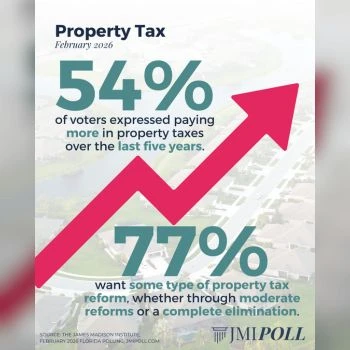
Proposals on how to address property tax rates will be a key issue in the upcoming 2026 legislative session.
However, the main debate will be how to strike a balanced approach for counties that rely on property taxes for education and public safety funding, while also delivering relief to homeowners.