Florida Governor Ron DeSantis and CFO Blaise Ingoglia have adopted the DOGE (Department of Government Efficiency) concept that was enunciated by billionaire Elon Musk in the first year of President Donald Trump’s second term.
Federal DOGE efforts relied on audits and line-by-line reviews of federal spending, by calling out excessive spending, and then making budget cuts based on information culled from the bowels of federal agencies.
Over twenty years ago, Florida Senate President John McKay and House Speaker Tom Feeney, with the avid support of then-Governor Jeb Bush, did the same, but through a different process, which was called Zero-based Budgeting.
Since Florida, like all other states except for Vermont, must produce a balanced budget, the legislature and Governor Bush realized that in trying economic times, fiscal restraint, at least for a conservative Republican, is an order of first magnitude.
I recall vividly that, early in his term, as economic conditions started trending downward, it was decided that all state agencies must produce their prospective budgets with a 20% and a 10% cut.
This pre-DOGE effort was brilliant.
Because it required every agency head, division, and departmental leader to comb through their respective budgets and determine (a) what the agency was minimally required to do by state law, and (b) what else the agency was spending money on beyond the basic adherence to state law.
Every agency head knew this was fraught with danger, as it would reveal what their base budgets were based on, what state law required them to accomplish. Anything beyond that minimum could be considered discretionary spending.
That spending may have been ordered by a previous Governor or legislature, but the monies did not have to be expended to further the agency’s core mission.
At the time, this radical concept was not appreciated by all, as it promised that significant budget cuts may be on the table. I recall budget subcommittee chairs encouraging agency heads to expeditiously undertake the two exercises and submit them for legislative review.
Most agency heads dragged their feet, but one agency head took on the challenge and was the first to submit their budget proposal. It was then-FDLE Commissioner James “Tim” Moore who stepped up, and consequently, his budget proposal was accepted without comment or challenge, and the chair then congratulated him for being first, and he warned other agencies to get in line and not be last, as more scrutiny would certainly be applied.
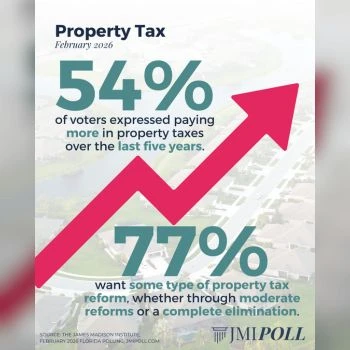
To me, this is something that Florida cities and counties should embrace as the debate begins on property tax reform, and potentially a Constitutional amendment campaign in the fall.
CFO Ingoglia has already selected some cities and counties to undergo a DOGE audit, but what if cities and counties, on their own accord, decided to request a 20% and 10% cut exercise from their agency heads for budgeting purposes?
The CFO has indicated that local spending has easily surpassed inflation, and thus, there is room for future local budget cuts, albeit holding law enforcement and first responders harmless in the process.
Acknowledging that all local governments do not tax and spend in the same fashion, nor is their budget process the same, this exercise would demonstrate to their taxpayers that local governments are willing to be introspective and accountable to their taxpayers.
The outcome would document the minimal costs of running each department, and it would also show how much and where other dollars in that department are expended.
In that fashion, taxpayers and the local elected officials would have the hard budget facts they need to drive policy debates about what noncompulsory spending is needed or not needed so they can reach a consensus in their community.
All government spending should be reexamined periodically to ensure that spending has not gone amok.
Florida’s elected leaders owe that to the taxpayers, and the sooner the process begins, the quicker we will know the results.
For sure, many Florida cities and counties will ignore this reasonable suggestion, and if you live in one of those places, your challenge is to get your leaders on board, as we are not likely to see a decrease in inflationary costs anytime soon, but perhaps a slowdown in the rise of costs.
What Bush, Thrasher, and Feeney initiated two decades ago is needed again today.
The results of their actions, then, have led to the prosperity that our state enjoys today: low taxes, low state debt, low unemployment, and a place that many Americans still desire to move to.
Barney Bishop III is a former executive director of the Florida Democratic Party and is a former CEO of Associated Industries of Florida, known as “The Voice of Florida Business.” He is currently the CEO of Barney Bishop Consulting in Tallahassee and can be reached at Barney@BarneyBishop.com