Guest Op-Ed by Tom Gaitens
For more than three decades, I’ve been part of movements warning that the United States is on an unsustainable fiscal path. From my early work with Empower America and Citizens for a Sound Economy, to later efforts with FreedomWorks, the message has been consistent: our political system is addicted to spending, allergic to accountability, and unwilling to confront reality.
By the time the Tea Party movement emerged in 2009, these warnings had become more urgent—but they were hardly new. For decades, elected officials at every level—local, state, and federal—have chosen expediency over responsibility. They bury their heads, defer hard choices, and pass the bill to the next generation.
Now the consequences are undeniable.
The United States is carrying roughly $39 trillion in debt, with tens of trillions more in unfunded liabilities. When total federal obligations are considered, estimates climb above $136 trillion—multiples of our annual economic output. This is not a partisan talking point; it is a structural reality. And no, we cannot simply “grow our way out of it.” Economic growth cannot keep pace with promises that were never grounded in fiscal math.
Meanwhile, we are spending nearly $1 trillion annually just to service the debt—money that produces no tangible public benefit. It does not build roads, strengthen national defense, or improve education. It simply pays interest on yesterday’s excesses.
The real driver of this crisis is not discretionary spending—the portion of the budget Congress debates each year—but the automatic, so-called “mandatory” spending programs that grow on autopilot. This distinction has been deliberately blurred in public debate, but it is essential. Without structural reform, these obligations will continue to expand regardless of who holds office.
There have been moments when reform was within reach. Ronald Reagan attempted to stabilize the system, only to see Congress undermine long-term discipline by expanding entitlement commitments elsewhere. In 2005, George W. Bush proposed personal retirement accounts as a path toward solvency—an idea rooted in earlier bipartisan discussions, including the Hyde Park Declaration. It failed by a single vote, despite prior support from members of both parties.
That failure was not just legislative—it was emblematic. Even when presented with viable reforms, the political class recoils. The incentives run in the opposite direction: promise more, spend more, and win the next election. Fiscal restraint, by contrast, is politically punishing.
This is not a problem confined to one party. Democrats have often embraced expansive government as a means of redistribution and political consolidation. Republicans, for their part, frequently acknowledge the problem but lack the will to act decisively when in power. Leadership comes and goes—whether it’s Barack Obama, Gavin Newsom, or congressional leaders like Mike Johnson and John Thune—but the trajectory remains unchanged.
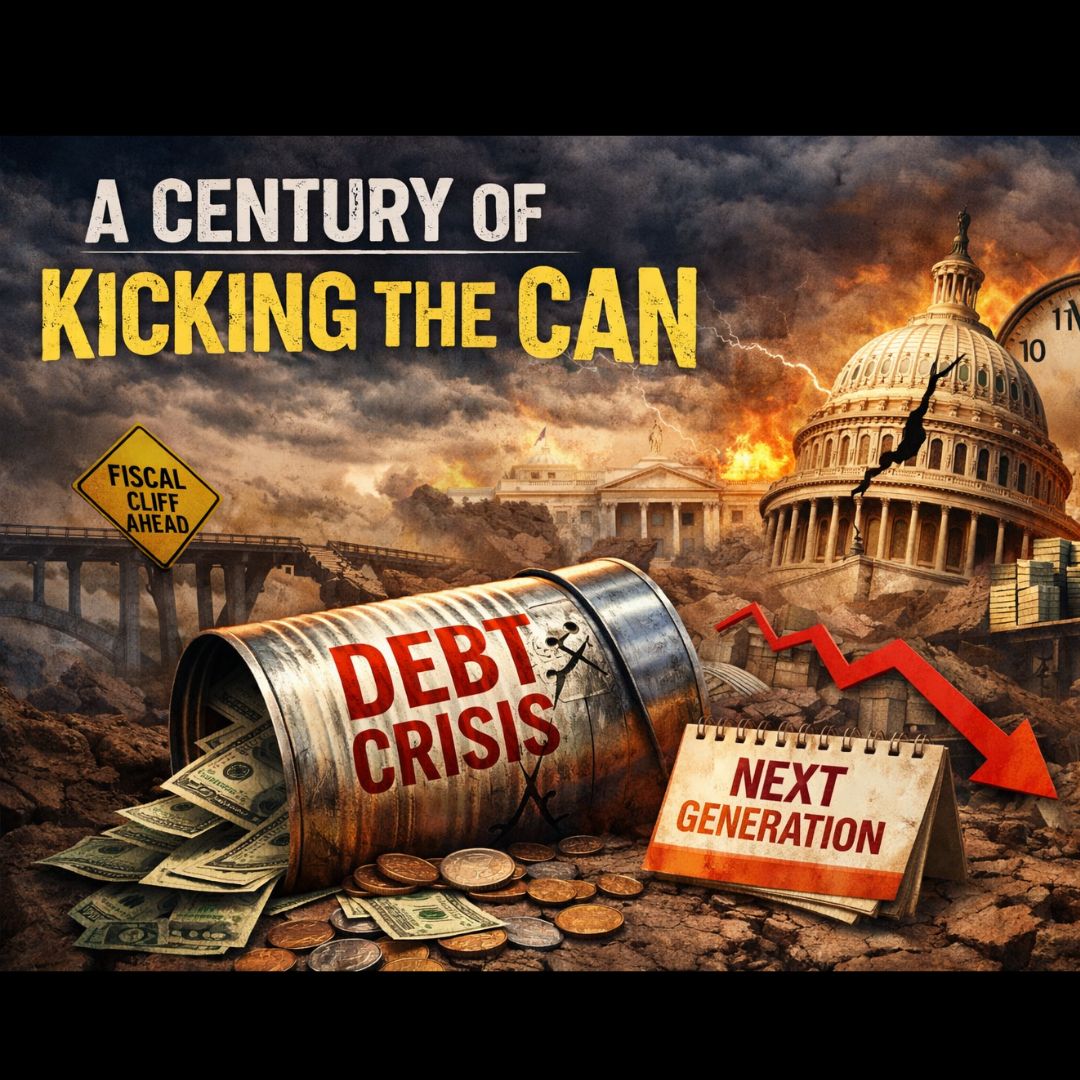
At its core, this is a failure of governance. The political class has, over nearly a century, constructed a system built on promises it cannot keep. Programs were expanded without sustainable funding. Benefits were guaranteed without honest accounting. And each generation of leaders found it easier to defer the reckoning than to confront it.
Even Franklin D. Roosevelt, in designing Social Security, understood the importance of balancing structure and sustainability. Yet key elements of that vision were altered from the start, setting the stage for long-term imbalance. The warnings have been there from the beginning.
Today, we are no longer debating a distant problem. The fiscal trajectory of the United States is a present and accelerating risk. Pension systems are underfunded. Entitlement programs are strained. Debt service is crowding out national priorities. And still, meaningful reform remains politically untouchable.
As the nation approaches its 250th anniversary, this is the question we must confront: can a system built on perpetual deferral survive indefinitely?
The answer will not come from rhetoric or blame-shifting. It will require political courage that has been in short supply—leaders willing to tell hard truths, make unpopular decisions, and prioritize long-term stability over short-term gain.
Absent that, the pattern will continue: more spending, more debt, more delay—until delay is no longer an option.