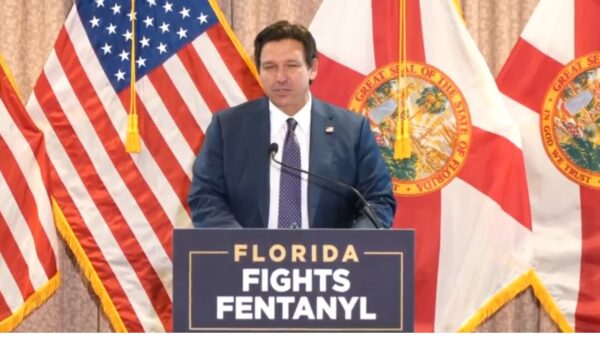
JACKSONVILLE, Fla. — Florida First Lady Casey DeSantis holds a narrow lead over U.S. Rep. Byron Donalds in the early stages of the 2026 Republican primary for governor, according to a new poll released Wednesday by the University of North Florida’s Public Opinion Research Lab (PORL).
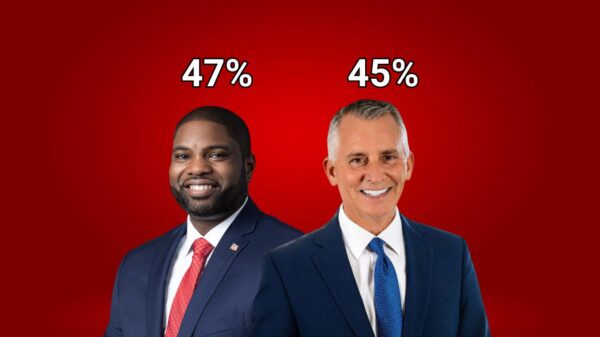
The survey of 797 registered Republican voters shows DeSantis with 32% support, just ahead of Donalds at 29%, a difference within the poll’s margin of error. Eight percent of respondents said they would back Rep. Matt Gaetz, while 18% remain undecided.
DeSantis leads among women, Hispanic voters, and those under 65, especially in North and Central Florida. Donalds, meanwhile, draws stronger support from men, voters 65 and older, those in South Florida, and Republicans who voted in the 2024 primary. Notably, among 2024 primary voters, Donalds leads DeSantis by 15 points.
“DeSantis was the early frontrunner when we asked this last fall,” said Dr. Michael Binder, PORL director. “But Trump’s endorsement of Donalds and the tightening timeline have shifted the race, making it a statistical toss-up.”

Policy concerns among GOP voters also appear to be shifting. The poll found property insurance was the top issue, cited by 20% of respondents, followed by housing costs (16%), immigration (15%), and the economy, jobs, and inflation (13%). When combined, property-related concerns account for nearly half of all responses—up from 36% earlier this year.

Favorability ratings for key political figures remain high among Florida Republicans. Former President Donald Trump is viewed favorably by 82% of respondents, while Gov. Ron DeSantis enjoys an 83% favorability rating. Casey DeSantis holds a 57% favorability rating, compared to Donalds at 43%. However, 40% of respondents said they had never heard of Donalds, while just 19% said the same about the First Lady.

When asked about the state-run Hope Florida Foundation, a project closely associated with Casey DeSantis, 63% said they were unfamiliar with it. Only 23% viewed it favorably. Dr. Sean Freeder, a political science professor at UNF, noted that the program’s low profile may help DeSantis now, but warned that its links to a recent scandal could hurt her campaign once more voters become aware.
On immigration policy, Florida Republicans expressed strong support for strict enforcement. Seventy-nine percent approved of current national immigration enforcement, including detentions and deportations, while 75% supported local immigration sweeps. Despite this, only 23% found it acceptable for legal U.S. residents to be mistakenly deported.
The recently opened immigration detention center known as “Alligator Alcatraz” received 65% approval. Support was lower among Hispanic voters, younger respondents, and first-generation immigrants.

The poll also explored views on tax policy. Asked whether they support eliminating property taxes for Florida homeowners—despite knowing those funds go toward services like schools and law enforcement—63% supported the idea, including a majority of younger voters.
“Floridians, particularly on the right, really don’t like paying taxes,” Binder said. “Even when told about the consequences, a solid majority want to do away with property taxes.”
Respondents were also asked about a proposed 2026 constitutional amendment to legalize recreational marijuana. Despite prior polls showing general GOP support for legalization, only 40% said they would vote for the amendment, while 58% said they would oppose it.
“This discrepancy could be the result of confusion or lingering skepticism from the state’s recent campaign against a similar ballot measure in 2024,” Binder said.
Methodology
The poll was conducted between July 14 and July 22, 2025, using a mixed-method approach of telephone interviews and online surveys. The sample included 797 active registered Republican voters across Florida, with a margin of error of +/- 3.9 percentage points. The results were weighted for education, geography, race, gender, age, and party registration to reflect the state’s Republican electorate.
UNF’s Public Opinion Research Lab is a non-partisan survey research center and a member of the AAPOR Transparency Initiative.