Tampa Bay Rays executives are increasing pressure on Tampa and Hillsborough County officials to move forward on a proposed new baseball stadium, with team leaders suggesting the franchise’s long-term future in the region could become uncertain if a deal is not reached soon.
The Rays have been seeking public commitments for a proposed $2.3 billion ballpark and mixed-use development near Hillsborough College’s Dale Mabry campus in Tampa. The team has set a June 1 target for definitive agreements, but Hillsborough County officials have indicated they are unlikely to meet that deadline. Rays CEO Ken Babby has since said the team is focused on securing a non-binding memorandum of understanding by the end of May.
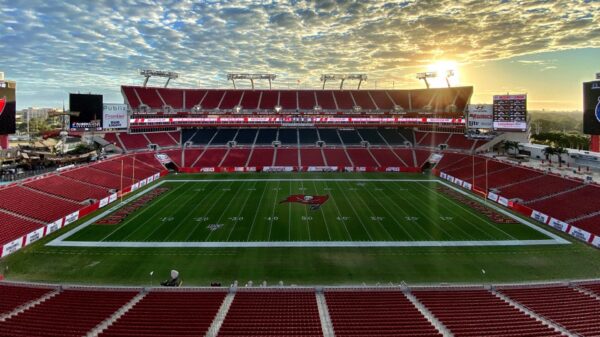
The proposed stadium would be built in Tampa’s Drew Park area, across Dale Mabry Highway from Raymond James Stadium. According to WUSF, the Rays are asking the city of Tampa for $250 million upfront and Hillsborough County for $750 million, totaling about $1 billion in public support. The team has said it would pay more than half of the project cost and cover cost overruns.
Rays managing partner and co-chair Patrick Zalupski told the Tampa Bay Times that the timeline becomes more difficult each day after June 1. The team has said it wants a new stadium open by March 2029, shortly after its lease at Tropicana Field in St. Petersburg expires in 2028.
The comments come as local officials continue to scrutinize the financial details of the proposal. During a nearly four-hour Tampa City Council workshop, council members heard from Rays executives, Hillsborough College officials and members of the public. No vote was taken, and questions remained about how the city would pay its portion of the deal.
One possible funding source is the Community Investment Tax, a half-cent sales tax recently approved by voters. Some critics argued that using those dollars for a stadium would violate the intent presented to voters and should require another public vote. A vote in November 2026, however, would go well beyond the Rays’ requested timeline.

Supporters of the stadium warned that failing to reach an agreement could put Tampa Bay at risk of losing Major League Baseball. During public comment, some fans urged officials not to become the local leaders who “send this team to Orlando,” according to Axios. WUSF also reported that one South Tampa resident compared the situation to Montreal and Oakland, two cities that lost Major League Baseball franchises.
The team has not announced a relocation plan, but the unresolved stadium talks have revived concerns about whether the Rays can remain in the Tampa Bay region long term. The franchise previously walked away from a separate St. Petersburg stadium and redevelopment deal, leaving the team’s future unsettled as its Tropicana Field lease approaches its end.

Orlando Group Continues Push For Major League Baseball
The renewed uncertainty surrounding the Rays’ stadium future comes as Orlando boosters continue their campaign to bring Major League Baseball to Central Florida.
The Orlando City Baseball Dreamers, LLC, also known as the Orlando Dreamers, announced that World Series MVP and Orlando-area native David Eckstein has formally joined the organization as an MLB Community Advisor. Eckstein, who grew up in Sanford and played college baseball at the University of Florida, is expected to assist with community collaborations, fan engagement and baseball-related strategy as the group expands its efforts in 2026.
“It is absolutely thrilling to be a part of this effort to bring Major League Baseball to my hometown,” Eckstein said in the announcement.
Key Demographic Facts and Figures in Orlando’s Favor
The Tampa metro area attracts approximately 14 million tourists each year. That’s 1/5th of the Orlando metro area’s (74 million). Orlando attracts the most tourists of any city in the nation. The highest influx is from April to May, and the next highest is from June to August. So 75% of annual tourists visit during the MLB Season, which totals 55 million.
Even if only 2 percent of April-September tourists in Orlando attended an MLB game, that would bring more than 1 million fans to fill seats across the Rays’ 81 home games. If you spread that across 81 home games, that’s an extra 12,000 fans to pad attendance from local residents. For context, the number of tourists would nearly equal the typical attendance at Tropicana Field in St. Petersburg, where the Rays averaged approximately 16,515 fans per game during the 2024 MLB season. (In 2025, they were forced to play at Steinbrenner Field due to damage at Tropicana Field.) While that difference is not astronomical, it’s a factor worth considering, especially since the Rays typically had the lowest attendance in the league.
Orlando also averages twice the number of annual tourists as Vegas, and Orlando’s demographics are much more family-centered and MLB-friendly than Vegas’, and we know the MLB still took the tourism padding into positive consideration.
The vast majority of Orlando’s tourists are upper-middle-class to upper-class families with two children. The 2% example is a conservative estimate, especially since the potential stadium construction is right next to SeaWorld, and 1 mile from Universal’s new theme park, Epic Universe. Disney is also expanding its local footprint, with $17 billion invested in new parks and attractions, so the current number of tourists is expected to increase.
Public Funding:
Even if private investors fund 50% or less of an Orlando-based stadium, commissioners for Orange County and the city council of Orlando have passed public funding for part of stadium construction during the past 25 years, and in that time frame, Orlando’s mayor was re-elected six times, and the county chair was re-elected to a second term to complete their two term maximum, and the funding was approved for a stadium that doesn’t even host a pro team (Camping World Stadium. AKA Citrus Bowl)
The Dreamers’ leadership group already includes Major League Baseball Hall of Famer Barry Larkin, who serves as the group’s MLB Ambassador, and former Boston Red Sox outfielder Johnny Damon, who is serving as an MLB Strategic Advisor. Larkin said Eckstein’s ties to Central Florida and MLB would help the group as it tries to build support for a franchise in Orange County. Damon said Orlando’s baseball credentials are strengthened by having Eckstein, Larkin and himself involved in the effort.
The Orlando group has pointed to Central Florida’s population growth, job growth, tourism economy and media market size as reasons the region should be considered for a Major League Baseball team. According to the Dreamers, Orlando is now the No. 15 media market in the country and is positioned to become the largest media market without an MLB franchise if it passes Detroit.
The Dreamers have also promoted a proposed domed stadium site on a 35.5-acre parcel near SeaWorld and the Orange County Convention Center. The group previously cited an independent 2023 study that projected a Major League Baseball team in Orlando could create about 25,000 permanent jobs and generate more than $40 billion in economic impact for Orange County over 30 years. The study also projected an additional $26 million annually in Tourist Development Tax revenue.
Orlando’s tourism industry could also become part of the argument. The Dreamers said the region has seen 12 consecutive months of record-setting Tourist Development Tax revenue and is on pace to surpass $400 million in annual collections. The group also pointed to increased tourism tied to the opening of Epic Universe, located near the preferred stadium site.
While the Dreamers have not been formally tied to the Rays’ stadium negotiations, the timing gives Orlando a potential role in the broader discussion. If Tampa and Hillsborough County are unable to reach a stadium agreement, Orlando supporters are likely to continue making the case that Central Florida can support Major League Baseball.
The Tampa proposal also includes redevelopment of land currently used by Hillsborough College and one of the county tax collector’s busiest offices. Axios reported that the tax collector’s office serves about 900 customers a day and that a replacement facility could cost taxpayers $15 million to $20 million.
For now, the Rays appear to be seeking at least a non-binding commitment from Tampa and Hillsborough County before the end of May. Whether that is enough to keep the stadium plan on track — and ease concerns about the team’s future in Florida — remains uncertain.