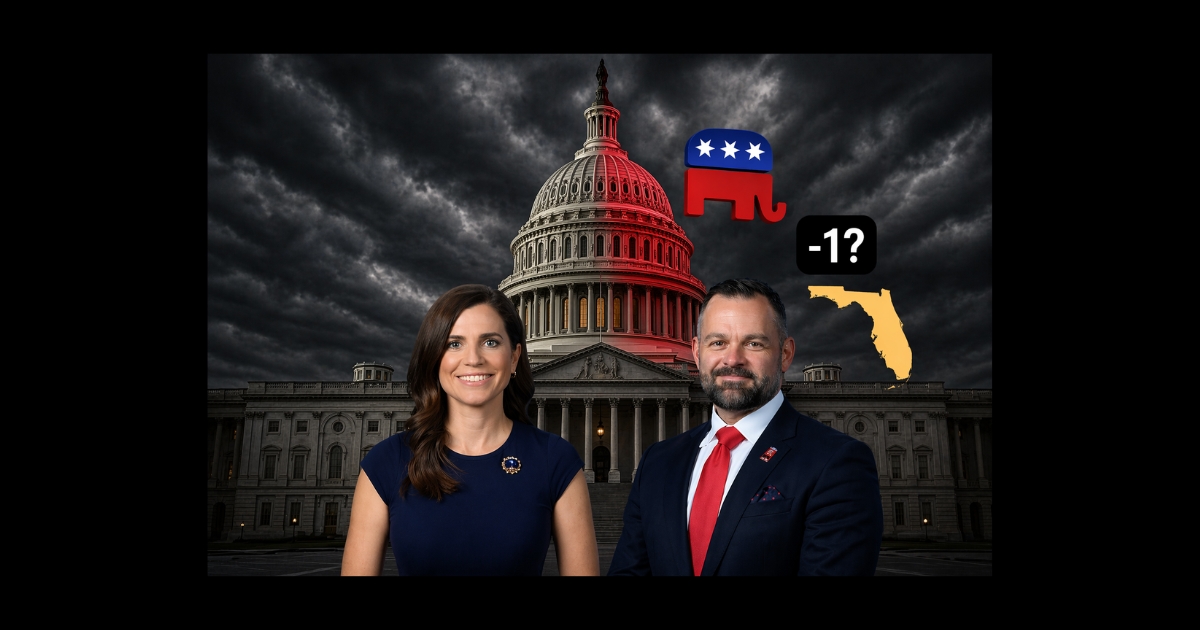
Florida could temporarily lose a vote in the U.S. House of Representatives following a dramatic move by South Carolina Congresswoman Nancy Mace (R – SC) to expel Cory Mills (R-FL). The resolution, filed this week, targets Mills, who represents Florida’s 7th Congressional District, and raises the prospect of the state losing representation—at least temporarily—if the effort gains traction in Washington.
Mace’s filing outlines a series of allegations against Mills, including claims tied to personal conduct and financial matters, and follows an earlier unsuccessful attempt to formally censure him. Mills has denied wrongdoing and pointed to the ongoing House Ethics Committee review, arguing that the expulsion effort is premature and politically motivated.


While expulsion from Congress is rare, the consequences for Florida would be immediate if such a vote were successful. Removing Mills from office would leave his Central Florida district without representation until a special election is held to fill the vacancy. That process can take weeks or months, depending on how quickly state officials move to schedule and conduct the election.
In the meantime, Florida would effectively have one less vote in the U.S. House—a factor that could carry added weight in a closely divided chamber. With Republicans holding only a narrow majority, even a temporary vacancy could influence the outcome of key votes on federal spending, legislation, and oversight matters.
The situation also draws attention to the broader political dynamics surrounding Mace, who has taken an increasingly aggressive posture within her own party. Earlier this year, Mace accused South Carolina Attorney General Alan Wilson of slow-walking an investigation into an alleged sexual assault case, underscoring her willingness to publicly challenge fellow Republicans.
Any expulsion effort would face a steep uphill battle, requiring a two-thirds majority vote in the House to succeed. Still, the filing alone signals escalating tensions within GOP ranks—and introduces a new layer of uncertainty for Florida’s congressional delegation, where even the possibility of a temporary vacancy could have outsized political consequences.