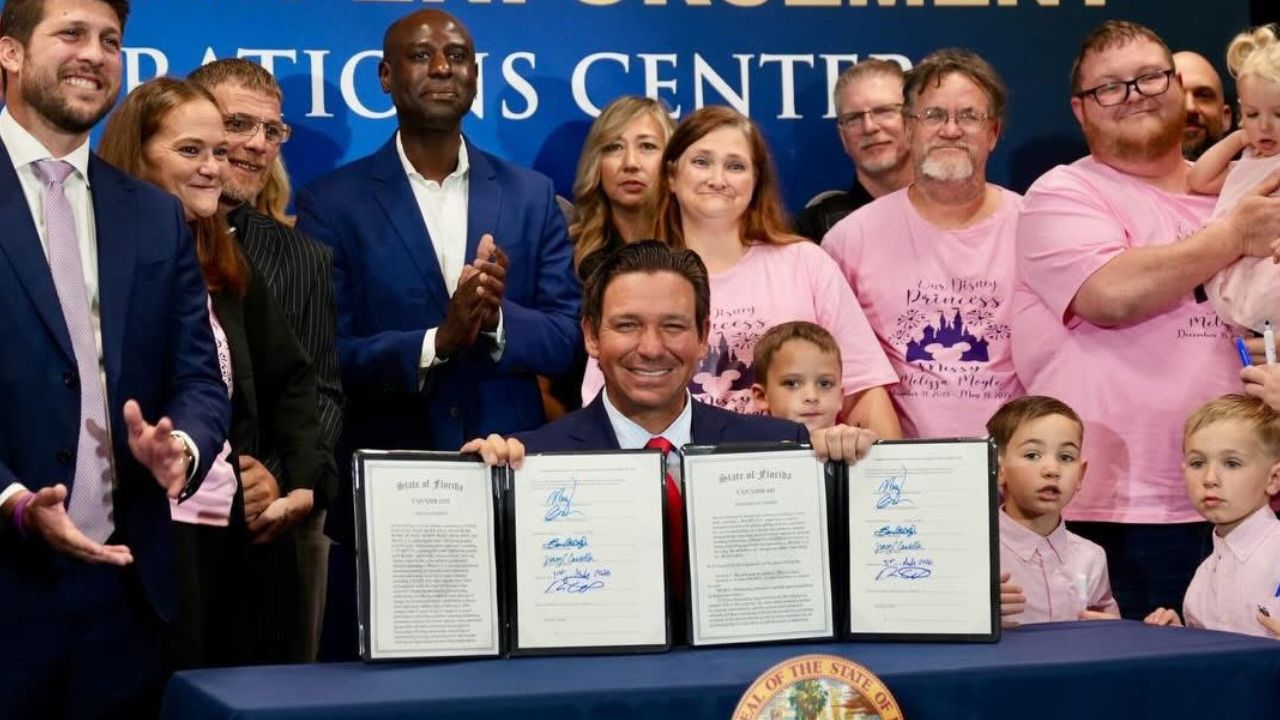
Florida Gov. Ron DeSantis on Tuesday signed two bills into law aimed at increasing penalties for sexual offenses involving children and tightening pretrial detention rules for certain dangerous crimes.
The measures — House Bill 445, known as “Missy’s Law,” and House Bill 1159 — were approved during the 2026 legislative session and focus on expanding criminal penalties, limiting release options for certain offenders, and addressing emerging forms of child exploitation.
House Bill 445 modifies Florida’s pretrial detention system by requiring individuals who are convicted of, or plead guilty to, specified dangerous crimes to be held in custody without bond while awaiting sentencing. The law also broadens the list of crimes considered “dangerous” to include certain computer pornography and child exploitation offenses, which can affect whether a defendant is eligible for release at an initial court appearance.


According to state officials, the legislation was proposed following the 2025 killing of five-year-old Missy Mogle. Florida Attorney General James Uthmeier said the law is intended to reduce judicial discretion in cases involving individuals convicted of serious offenses, requiring detention after conviction rather than allowing release on bond.
House Bill 1159 expands criminal penalties tied to child sexual abuse material and related offenses. The law increases penalties for using a child in a sexual performance, as well as for possessing, distributing, or creating such material. It also establishes mandatory minimum prison sentences for certain crimes committed by adults and creates a life felony charge for the aggravated exploitation of a child under age 12.
In addition, the legislation addresses newer forms of exploitation by criminalizing the creation and distribution of computer-generated sexual abuse material involving minors.

State officials said the measures build on prior efforts to strengthen penalties for child exploitation, enhance sex offender monitoring requirements, and support law enforcement operations targeting online predators.
Both laws take effect as part of Florida’s broader push to expand criminal penalties and enforcement tools related to crimes against children.