To deal with Florida’s housing affordability problems, lawmakers passed the Live Local Act in 2023. The Act was later amended in 2024 and 2025.
To address the growing demand for affordable housing, certain programs were offered to local governments.
Providing developers with financial and regulatory incentives to build more affordable housing units. Requiring local governments to prioritize the development of affordable housing units is proposed following the specifications in the Act. Streamlining the process for the development of affordable housing and ensuring that a substantial portion of new housing units is available to a wide range of income levels.
Now, two years later, Florida TaxWatch has released an update on the Implementation of the Live Local Act, to better understand how local governments have implemented certain provisions and what has worked and what has not worked.

TaxWatch suggests that some new ideas should be implemented to enhance the act.

Financial incentives—include the appropriation of state funding to the Florida Housing Finance Corporation and the establishment of a new corporate tax donation program;

Property tax exemptions—portions of property used for affordable housing are eligible for property tax exemptions, ranging from 75 percent to 100 percent of the assessed value.
Requirements of local governments—local governments are required to allow mixed use and multi-family development in areas zoned for commercial, mixed use, or industrial, as long as at least 40 percent of the housing units are affordable for 30 years;
Simplified zoning—zoning processes are streamlined for affordable housing projects. Developers may proceed directly to permitting without first having to amend the local government’s comprehensive plan or zoning, or securing a variance, as long as certain requirements are met.

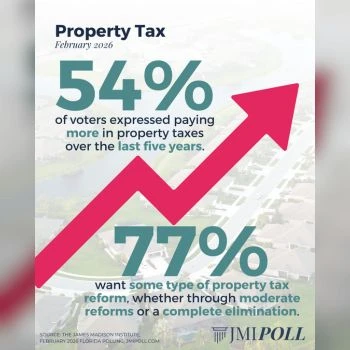
In a March 2025 report entitled “More States Are Using State-Level Tax Credits to Address Workforce and Affordable Housing Deficits,” Florida TaxWatch acknowledged that, although the Act has had positive impacts in helping to reduce the deficit of affordable housing, inflation, rising property taxes, and skyrocketing inflation continue to make housing less affordable for many Floridians. TaxWatch recommended that the legislature consider “creating state-level tax credits to strengthen the state’s array of housing initiatives,” including:
A corporate income tax credit for homebuilders to help them build more single-family homes that are affordable to middle-income families;
A state low-income housing tax credit for rental properties to augment the federal credit; and
Credits for projects that adapt properties such as historic properties.