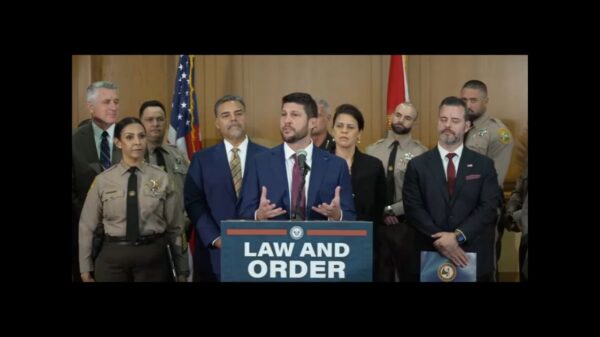
TALLAHASSEE, Fla. — Florida Attorney General James Uthmeier announced Thursday what officials described as the largest seizure of illegal and contraband vaping products in state history, following a series of coordinated enforcement actions carried out by a statewide Vape Task Force.
The joint operations involved the Attorney General’s Enforcement Unit, the Florida Department of Agriculture and Consumer Services (FDACS), the Florida Department of Business and Professional Regulation, and multiple local law enforcement agencies. Authorities targeted vape shops accused of unlawfully selling products that violate Florida law and pose risks to children and consumers.
Uthmeier said the seizure sends a strong warning to retailers who profit from illegal nicotine products marketed to minors or designed to evade state regulations. State Agriculture Commissioner Wilton Simpson added that such products threaten public health and undermine legitimate businesses, emphasizing continued enforcement efforts to remove them from store shelves.


Law-enforcement partners across four task-force operations confiscated 2,183 illegal vapes, along with nitrous-oxide canisters, chargers, and related paraphernalia. Seizures included 263 devices in Clermont, 636 in Ocoee, 855 in Okaloosa County, and 423 in Milton.
Officers also seized 195 nitrous-oxide canisters from one business during a compliance check, along with additional canisters, chargers commonly known as “crackers,” and balloons used for inhalation. The owner of the business was arrested on multiple felony counts tied to the illegal sale of nitrous oxide, which Florida law classifies as drug paraphernalia.
Regulatory inspections by FDACS led to the removal of thousands of additional illegal products from stores in Clermont and Ocoee, with totals from other enforcement locations still being finalized. Officials said violations included improper labeling, lack of child-resistant packaging, unlawful marketing practices, and packaging or branding designed to appeal to children.

Authorities also cited references to illegal substances and the presence of controlled or prohibited compounds—including 7-hydroxymitragynine, tianeptine, and hemp extracts exceeding legal THC limits—as reasons for removing products from sale.
State and local leaders said the coordinated enforcement effort reflects an ongoing commitment to protect communities, particularly minors, from dangerous or unlawful vaping and inhalant products. Investigations and inspections remain active statewide.
Uthmeier’s office noted that the Vape Free Florida Fund, created in 2025 following a $79 million settlement with JUUL Labs, supports enforcement of the state’s nicotine and vapor laws and aims to keep harmful products out of children’s hands.