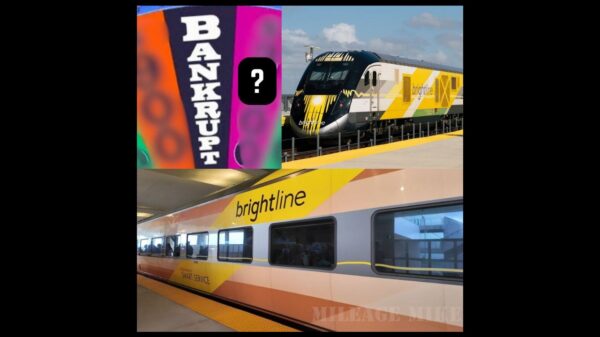
Miami, FL — In a landmark move for South Florida transit, the Miami-Dade County Commission has officially approved critical funding and commitments to advance the Northeast Corridor Rapid Transit Project, which will introduce commuter rail service along Brightline’s existing corridor between Downtown Miami and Aventura.
By approving the funding plan, the county has moved beyond planning toward actual implementation of a 13.5-mile transit corridor that will link underserved neighborhoods and burgeoning activity centers. The local commitment helps solidify the county’s share of capital costs needed to unlock federal and state contributions.
This corridor is a key component of Miami-Dade’s broader SMART (Strategic Miami Area Rapid Transit) program, which envisions multiple rapid transit lines to improve mobility throughout the county.

According to county documents, the total capital cost is estimated at about $927.3 million, accounting for stations, track enhancements, rolling stock, grade separations, and ancillary infrastructure. The Federal Transit Administration (FTA) has pledged up to $389.5 million through its New Starts / Capital Investment Grants (CIG) program, covering roughly 42% of the project’s cost. The State of Florida has committed $200 million toward the project, while the remainder is to be covered by local sources, including the county’s People’s Transportation Plan (PTP). With the county’s approval, the project is now positioned to enter the engineering phase — a stage involving final design, procurement, and preparation for construction.

The Northeast Corridor project will provide transit access for new communities, with service planned for municipalities including North Miami, Miami Shores, El Portal, North Miami Beach, and parts of Wynwood, the Design District, and Little Haiti. Estimates suggest the corridor could remove nearly 8,000 automobile trips per day from local roads. The new line is also expected to expand access to jobs, education, and services for over 65,000 low-income residents who currently rely heavily on bus service. Because the corridor follows the existing Brightline / Florida East Coast Railway (FEC) alignment, commuter service will integrate with the region’s intercity rail network.
Once built, the corridor will add five new commuter stations, augment existing Brightline stations at MiamiCentral and West Aventura, and include supporting infrastructure such as a vehicle maintenance facility.


Support for the project has come from transit advocates, local leaders, and residents frustrated by limited east-west transit options. Many see this as a long-overdue expansion of rail options in Miami-Dade beyond the existing Metrorail, Metromover, and bus networks.
However, challenges remain. In 2025, Florida’s new state budget eliminated a provision that previously earmarked $200 million in real estate tax revenue to support rail projects in Miami-Dade. Some state legislators have questioned the county’s use of public funds for projects tied to private rail infrastructure. The FTA’s initial grant is also conditional; a final Full Funding Grant Agreement (FFGA) will depend on further evaluation, including environmental, financial, and engineering reviews. Early projections suggested operation might begin in the early 2030s.
With funding secured and the engineering phase underway, the next steps include completing final design work, beginning procurement for rolling stock, signaling, and stations, and securing a Full Funding Grant Agreement with FTA before major construction begins. Construction will be sequenced to minimize service disruptions along the existing corridor. If all milestones are met and political support holds firm, Miami-Dade could see the first commuter trains running by the early 2030s.

The county’s approval of funding marks a turning point — from planning to implementation — for a project that has long been envisioned but seldom acted upon. By aligning local, state, and federal dollars, Miami-Dade is betting that rail infrastructure is essential to its future growth, mobility, and equity goals. Whether this ambition fully materializes will depend on ongoing cooperation among governments, the private sector, and community voices as the corridor acquires concrete form.